Kitchen Myth-Busting
Clean Break: Why Produce Wants Water, Not Dish Soap
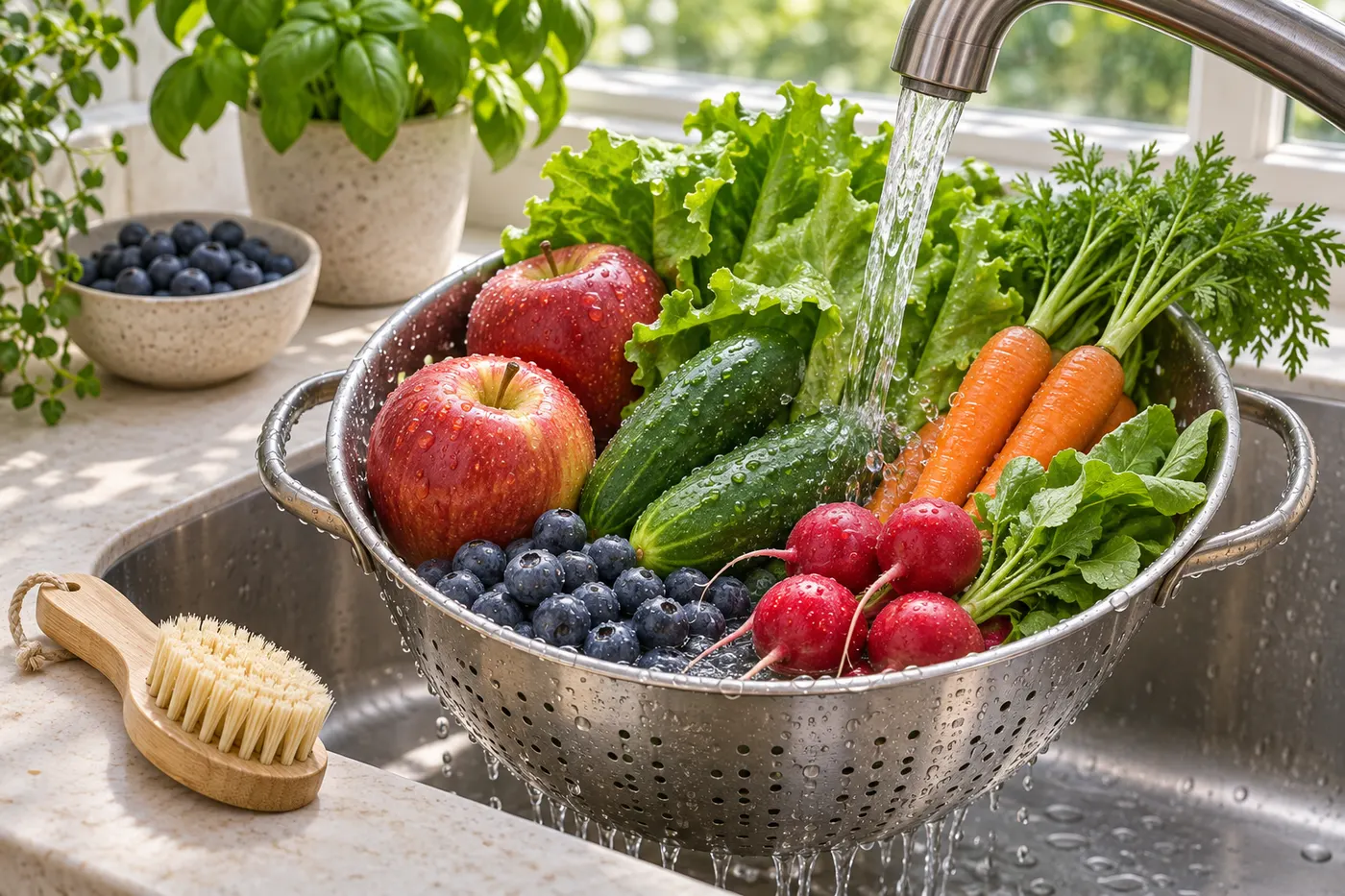
A squeaky-clean apple sounds reassuring, but food-safety agencies say the soap belongs on your hands—not your produce.
If a little dish soap cuts grease from a plate, shouldn’t it give an apple an extra-thorough clean? That logic sounds tidy, but the kitchen shortcut is backwards: Health Canada, the U.S. Food and Drug Administration and the Centers for Disease Control and Prevention all point home cooks toward cool running water for fresh produce—not soap or detergent.
The key distinction is what each product was made to clean. Soap is useful for hands, knives, cutting boards and counters because those surfaces can be rinsed thoroughly and the product is intended for that job. Fruits and vegetables are food, and their peels, skins and crevices are not dinner plates. The FDA notes that produce is porous, so household soap or detergent can be absorbed even after rinsing and may leave residues that can make someone ill.
Commercial produce wash is not a required upgrade, either. Health Canada says it is not necessary, while the FDA says the safety of residues from these washes is not known and their effectiveness has not been tested. That does not make water magical. Washing can reduce dirt and some bacteria on the surface; it cannot guarantee that every microorganism is gone.
The useful routine is pleasantly simple. Wash your hands with soap and water first. Hold unpackaged produce under fresh, cool, running water and rub it gently. Use a clean produce brush on firm items such as melons, carrots, potatoes and cucumbers, then dry with a clean towel or paper towel. Cut away bruised or damaged areas, and discard anything rotten.
Wash before peeling or cutting when the knife will cross the outer surface. That helps keep whatever is on the peel from riding the blade into the edible part. One exception is sealed produce labelled pre-washed or ready-to-eat: Health Canada and the FDA say it can be used without another wash, provided it stays away from dirty hands, utensils and surfaces.
A sink full of standing water is not the same as running water. Health Canada advises against soaking produce in the sink because the basin itself can harbour bacteria. Let the tap carry loosened material away instead of giving it a shared bath.
So the myth gets a clean rinse: more suds do not mean safer salad. Save the soap for your hands and kitchen gear, give fresh produce a gentle wash under running water, and treat that step as risk reduction—not a force field. Simple, practical and blissfully bubble-free.
Sources
You may also like these