Ingredient Science
Chestnut Check: The Nut That Cooks Like a Starch
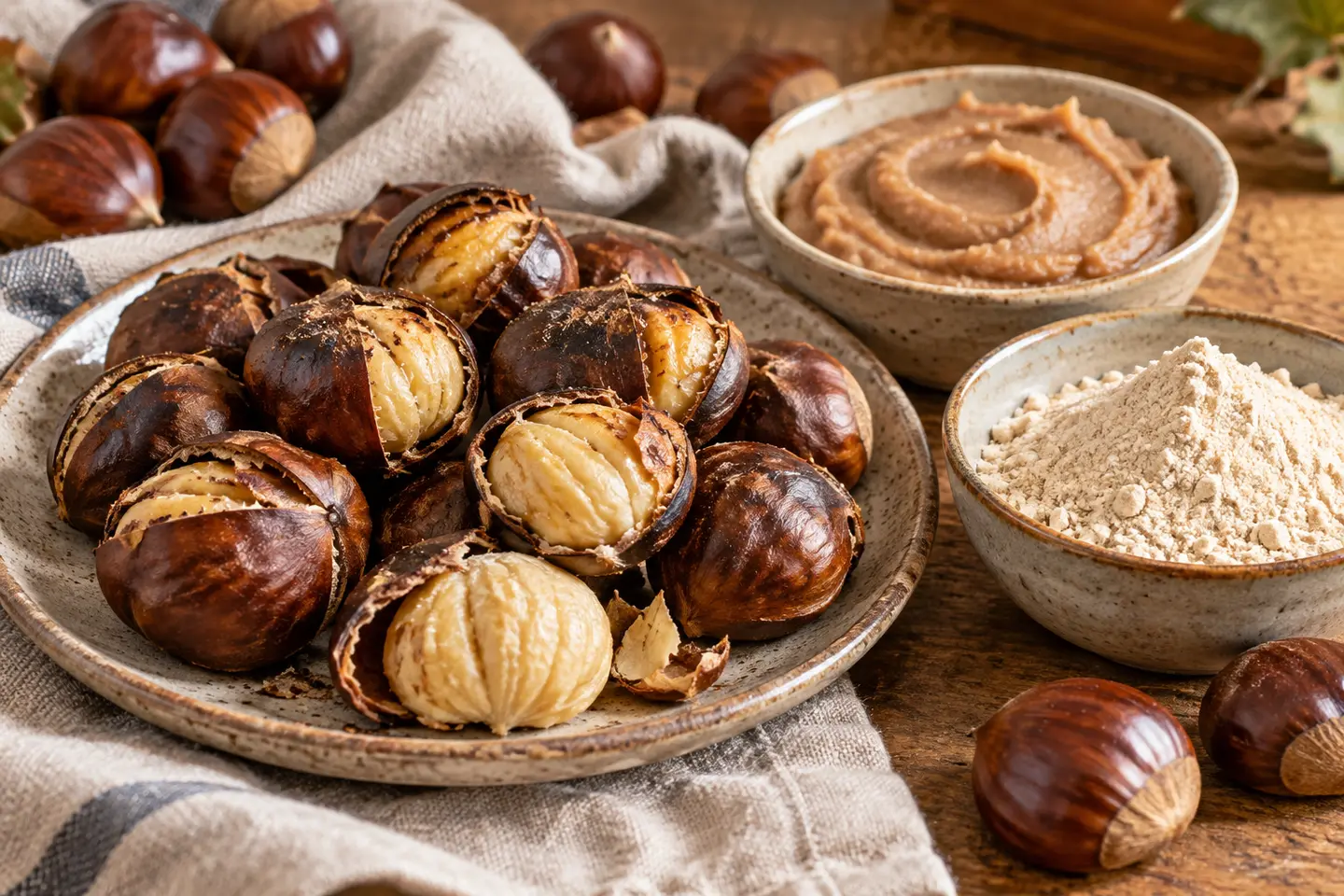
Chestnuts wear the same spiky family badge as richer nuts, yet their kitchen behaviour is closer to a potato or grain. The difference is hiding in an unusually starchy centre.
Most nuts arrive ready to add richness: grind them into butter, toast them for crunch or scatter a small handful over dinner. Chestnuts walk into the same snack aisle with a very different résumé. Once cooked, they turn tender and floury because much of their structure comes from starch rather than the large store of oil found in familiar nuts such as almonds or walnuts.
A scientific review of sweet chestnut reports roughly 43 grams of starch and 3 grams of fat per 100 grams of dry matter. FAO's chestnut reference gives a similar broad picture, describing the crop as rich in starch and low in lipids compared with walnuts, hazelnuts and almonds. Exact numbers move with species, cultivar, growing conditions and whether a result is reported fresh or dry, but the basic contrast is remarkably consistent.
Fresh chestnuts also contain much more water than a jar of roasted almonds. That helps explain why they feel dense rather than oily and why fresh chestnuts do not keep like dry pantry nuts. Store them cold and follow the seller's guidance, and discard any that are mouldy, sharply sour-smelling or badly shrivelled. Their spiky shells may look armoured, but the food inside is still fairly perishable.
Heat gives the starch its starring role. Research comparing raw, boiled and roasted chestnuts found that cooking changes the starch granules and their pasting behaviour. In everyday kitchen terms, water and heat soften the interior into the familiar mealiness of a cooked chestnut. Boiling supplies abundant moisture; roasting drives more moisture away and encourages a drier, sweeter impression at the surface. Variety and cooking time keep either method from producing one universal texture.
This is why a chestnut can do jobs that would seem odd for a pecan. Cooked chestnuts can thicken a soup, become a smooth purée, add body to a vegetable filling or break into soft pieces in a pilaf. Chestnut flour can bring sweetness and starch to pancakes, cakes and pasta, although it does not contain gluten and is not a cup-for-cup structural replacement for wheat flour in every recipe.
A useful planning trick is to count chestnuts as part of the starchy body of a dish, not merely as a fatty garnish. If a roast-vegetable plate already includes potatoes, for example, a generous chestnut portion may fill a similar culinary role. That is a cooking observation, not a rule about anyone's diet; portions and recipes still decide the finished meal.
Chestnuts remain tree nuts, so their unusual composition does not make them suitable for someone with a relevant allergy. They are also different from horse chestnuts, which Michigan State University Extension warns are not edible. Buy clearly identified culinary chestnuts rather than relying on a look-alike gathered from the ground.
So yes, the chestnut belongs in the nut conversation. It simply speaks with a starchy accent. Roast one and the surprise is not that it forgot to be buttery; it is that this nut was built for mash, crumb and comforting substance all along.
Sources
You may also like these