
Food History
Catch Up with Ketchup: It Wasn't Always Tomato
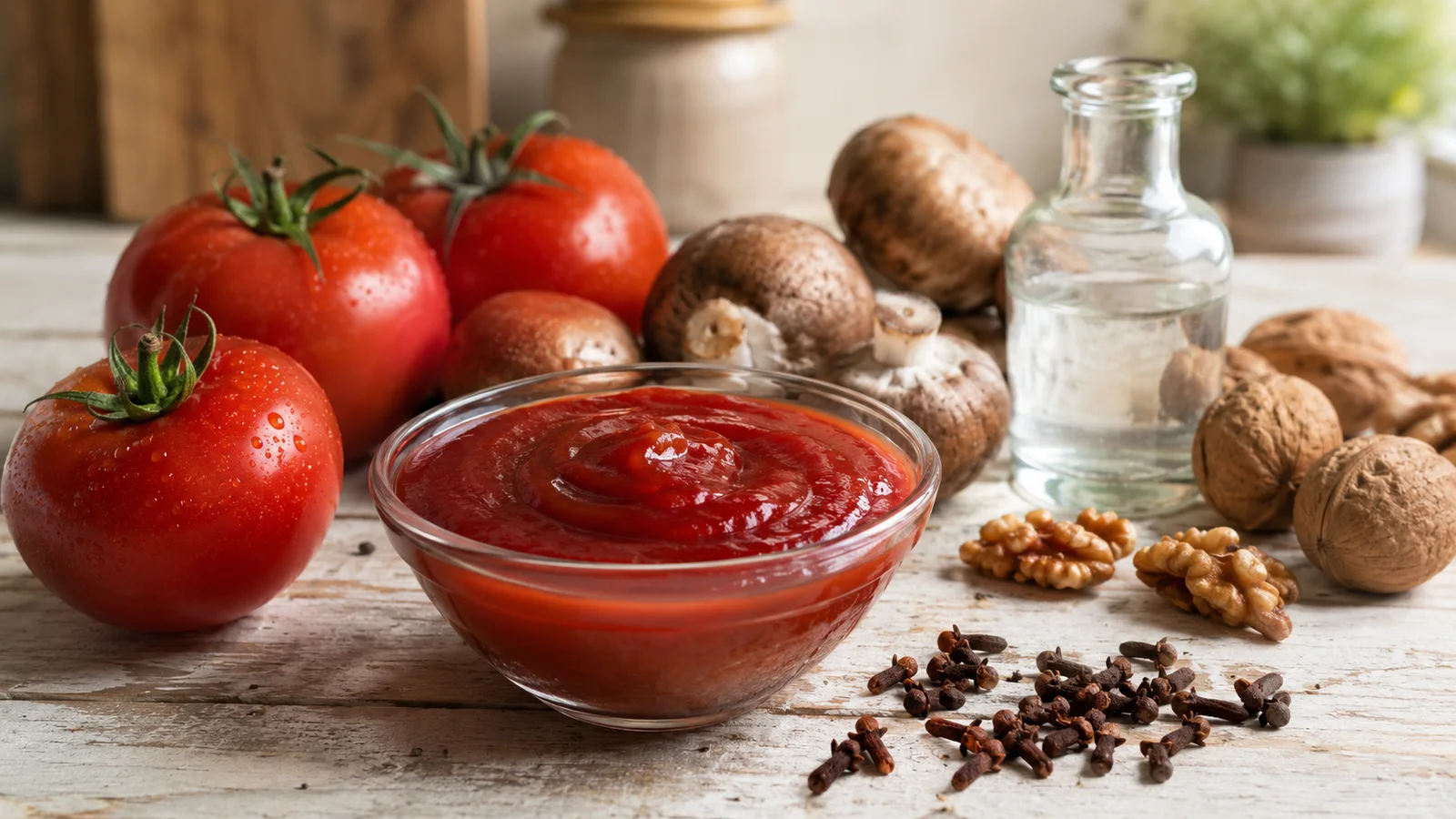
Before ketchup became the bright red partner to fries, its name travelled through a world of fermented sauces, mushrooms, walnuts and plenty of tomato-free experiments.
Ketchup seems inseparable from tomatoes, but the condiment had already lived several lives before a tomato entered the bottle. Its story is less a single invention than a long game of culinary telephone, with cooks adapting a savoury sauce to the ingredients available around them.
The exact route of the word is still debated, but Oxford Reference connects ketchup to Chinese terms for the brine of pickled fish. National Geographic describes a widely accepted link to Hokkien Chinese kê-tsiap, associated with fermented fish sauce. Versions of these intensely savoury sauces moved through trade routes in Southeast Asia and eventually caught the attention of European sailors and merchants.
When British cooks tried to recreate the idea, ketchup became a broad category rather than one fixed recipe. Historical versions used mushrooms, walnuts, oysters, anchovies and other strongly flavoured ingredients. These early sauces were often thin, salty and fermented, and many were not vegan. The important connection was their concentrated savouriness, not their colour.
Tomatoes joined the story much later. Smithsonian Magazine notes that James Mease published one of the earliest known American tomato-ketchup recipes in 1812. He called tomatoes 'love apples' and combined them with spices, starting a transformation toward the sweet, tangy red sauce now familiar across North America.
Through the 19th century, tomato ketchup became thicker and more standardized. Vinegar supplied acidity, sugar balanced the sharpness, and spices added warmth. Commercial production helped make that particular version dominant, while mushroom ketchup and other older relatives became niche condiments.
Most basic tomato ketchup sold today is made from tomatoes, vinegar, sugar, salt and spices, so it is usually plant-based. Specialty bottles can be different, though. Honey, Worcestershire sauce containing anchovies, or other flavourings may appear in unusual recipes, so checking the ingredient list remains the easiest way to confirm.
Ketchup's history is a useful reminder that familiar foods are rarely frozen in time. A condiment can change continents, swap its central ingredient and reinvent its texture while keeping the same name. The next time a little red blob lands beside the fries, it arrives with several centuries of recipe edits behind it.
Sources
- https://www.oxfordreference.com/display/10.1093/oi/authority.20110803100034846
- https://www.nationalgeographic.com/culture/article/how-was-ketchup-invented
- https://www.smithsonianmag.com/arts-culture/brief-but-global-history-ketchup-180969725/
- https://www.smithsonianmag.com/arts-culture/the-birth-of-non-alcoholic-ketchup-104660832/