
Food Factoid
Cashew Outside: The Seed That Hangs Below Its Apple
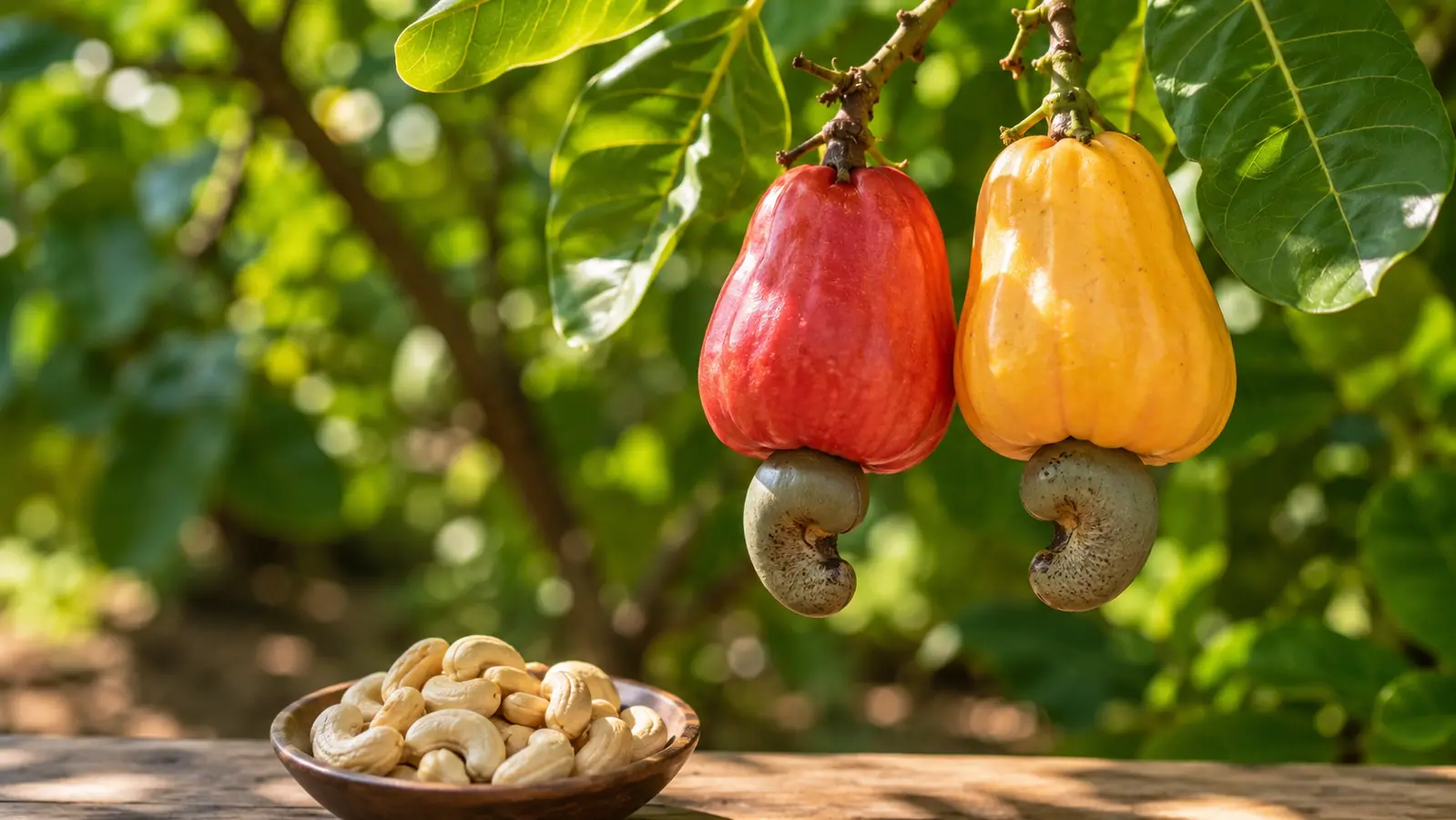
A cashew tree wears its familiar snack on the outside of a juicy red or yellow “apple”—and that curious arrangement explains plenty about how cashews reach the kitchen.
A cashew on the tree looks as if someone assembled the fruit backwards. A plump red or yellow cashew apple hangs from the branch, while a grey-green, kidney-shaped shell dangles underneath. Inside that shell is the pale crescent we call a cashew.
Botanically, the arrangement is even more surprising. University of Florida horticulture specialists describe the hard-shelled portion as the tree’s true fruit. The colourful cashew apple above it is an accessory fruit: a flower stalk, or receptacle, that swells into a juicy, pear-shaped structure. So the “nut” is not hiding in the apple at all.
The two parts do not finish at the same time. University of Florida guidance says the cashew nut takes roughly 50 to 60 days to mature after flowering, followed by another 20 to 30 days for the apple. That sequence helps explain why the mature shell appears to be carrying a bright fruit above it rather than growing inside one.
Cashew apples are not just botanical decoration. They are eaten in growing regions and can become juice, jam, pickles and other products. The Food and Agriculture Organization notes that the apples are soft and fragile, which makes long-distance transport difficult. That is one practical reason shoppers far from tropical production areas commonly know the kernel but rarely meet the apple.
There is also an important reason cashews arrive already shelled. The raw shell contains a caustic liquid that can injure skin. Commercial processors use controlled steps such as steaming or roasting before the kernel is removed. Even packages labelled “raw cashews” contain kernels that have been safely separated from those hazardous shells; cracking a freshly harvested cashew at home is not a DIY snack project.
The unusual fruit also creates an interesting food-use puzzle. A 2025 study indexed by the FAO’s AGRIS database describes cashew apples as largely underused in many producing countries, despite possible uses for juice and other products. It is reasonable to see the apple as an ingredient opportunity, although the best uses depend on local harvest, processing and markets.
In the kitchen, the lesson is delightfully simple: that creamy cashew sauce began with one seed, one protective shell and one conspicuous apple perched on top. The next handful comes with a much stranger family portrait than the snack bowl suggests.