
Cooking Science
Cabbage Patch Chemistry: Why Purple Slaw Turns Pink
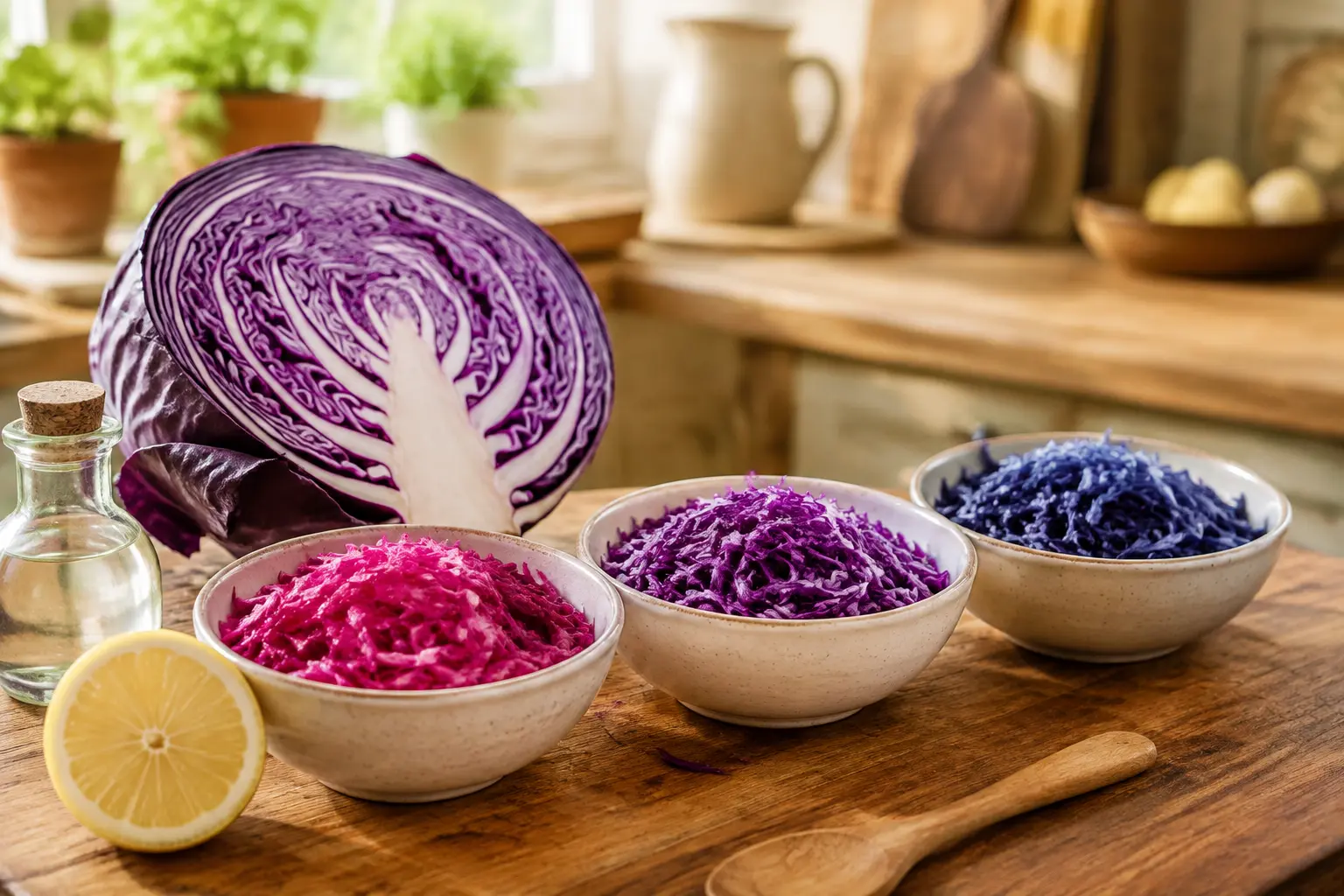
Red cabbage carries a built-in colour meter. A splash of lemon or vinegar can turn its purple leaves bright pink, while a change in the other direction can send them toward blue.
Red cabbage may look like a dependable purple vegetable, but it is quietly running a chemistry demonstration every time you dress a slaw. Add lemon juice or vinegar and the shreds can brighten toward pink or magenta. Move the mixture in a more alkaline direction and the same cabbage may lean blue or green. No food colouring is sneaking into the bowl. The pigments are simply changing how they interact with light.
The colour crew is a family of plant pigments called anthocyanins. Red cabbage contains an unusually varied collection of them. U.S. Department of Agriculture researchers identified 36 anthocyanins in the vegetable, including eight that had not previously been detected there. Their complicated structures help explain why one humble cabbage can produce such a broad palette.
Anthocyanin molecules respond to acidity, which cooks usually describe with the pH scale. In an acidic mixture, the pigments favour structures that appear red or pink. Around neutral conditions they are more likely to look violet or purple. As the pH rises, blue and then green tones can appear. Researchers studying red-cabbage pigments have documented a progression from red at very low pH through pink, violet, blue and green as conditions become more alkaline.
That is why an acidic dressing does double duty in a cabbage salad. Lemon juice, lime juice or vinegar adds tart flavour while also pushing the colour toward a livelier pink-red. If a cooked cabbage dish looks a little too blue, a modest splash of vinegar can often steer it back toward purple or red. The exact result depends on the cabbage, the other ingredients and how much acid is present, so think of it as a colour dial rather than an on-off switch.
You can see the effect with a tiny kitchen test. Divide a spoonful of finely shredded red cabbage among three small bowls. Add lemon juice to the first, plain water to the second and water containing a very small pinch of baking soda to the third. Stir and wait a moment. The acidic bowl should move toward pink, the water sample should remain close to purple, and the alkaline sample may become blue-green. The baking-soda sample is for observing, not improving your salad, because extra alkalinity can also change flavour and texture.
The colours are not permanent paint. Reviews of red-cabbage anthocyanins note that pH, temperature, light, oxygen and other ingredients can affect pigment stability. One storage study also found that common food acids produced substantial colour changes in red-cabbage extract over time. That helps explain why a freshly dressed slaw and yesterday's leftovers may not wear exactly the same shade.
So the next time purple cabbage flashes hot pink under a squeeze of lemon, give the bowl a tiny round of applause. Dinner has just performed a molecular costume change, and the dressing was both flavour director and lighting designer.