
Ingredient Know-How
Bean There, Whipped That: The Tiny Kitchen Magic of Aquafaba
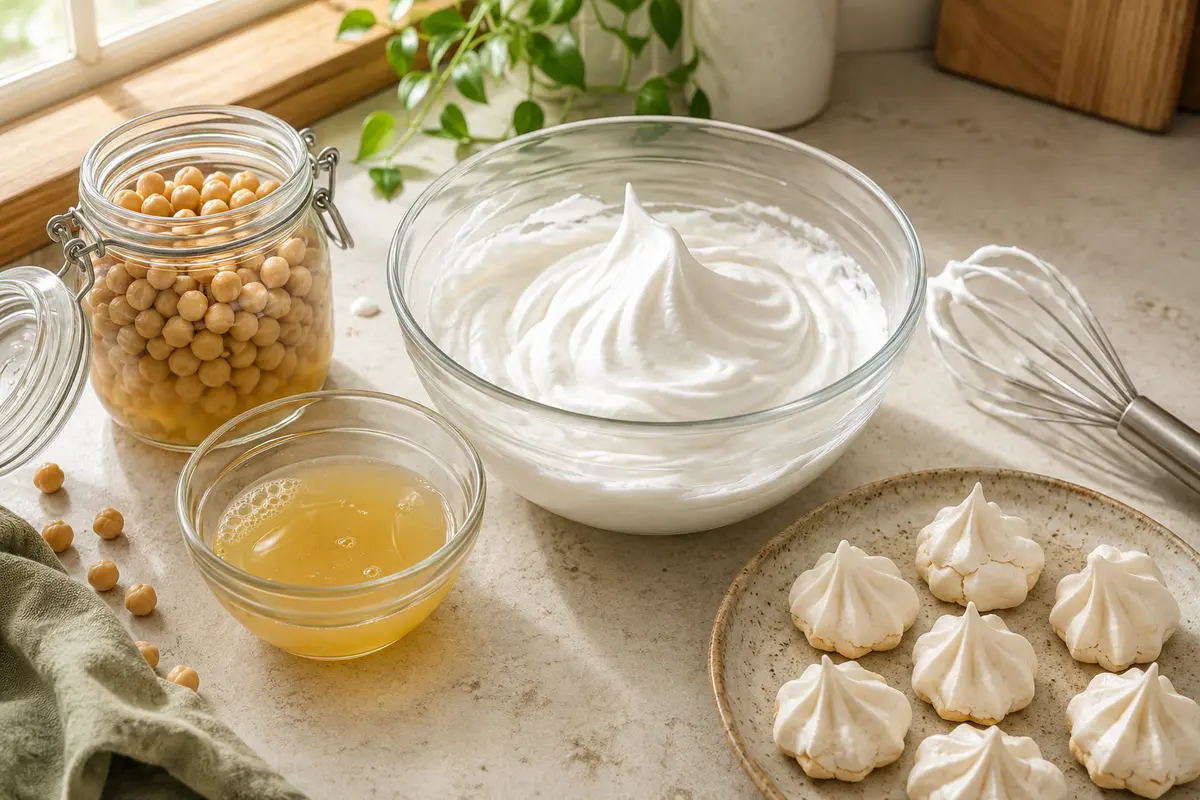
That chickpea liquid headed for the drain can whip, bind and emulsify. Here is why aquafaba works and how to give it a useful second act.
The next time you open a can of chickpeas, pause before tipping the liquid down the drain. That pale, slightly thick liquid is aquafaba, and it can do a surprisingly convincing impression of egg white in everything from meringues to mayonnaise.
Aquafaba is simply the cooking liquid from chickpeas or other legumes. During cooking, some of the beans’ water-soluble components move into the liquid. Researchers have found that its mix of proteins, carbohydrates and other compounds gives it useful foaming and emulsifying abilities. In plain kitchen language, it can trap air when whipped and help oil and water stay mixed.
Canned chickpea liquid is the easiest place to start. A 2023 study comparing several preparations found that all tested aquafabas foamed well, while the commercial canned chickpea version behaved most like egg white and produced the highest-rated aquafaba meringues in its sensory test. Results still vary by brand because thickness, salt and processing differ.
For baking, a common starting point is three tablespoons of aquafaba for one whole egg, or two tablespoons for one egg white. Treat that as a practical guideline rather than a universal law. A brownie is forgiving; a delicate macaron may demand a little experimentation.
Want peaks? Chill the liquid, place it in a very clean bowl and whip it with an electric mixer. A pinch of cream of tartar can help stabilize the foam. If the liquid seems watery, gently simmer it first until it is closer to the consistency of raw egg white, then cool it completely before whipping.
Aquafaba also works without whipping. Its emulsifying talent makes it handy in vegan mayonnaise, creamy dressings and sauces. Research has shown that concentration matters: aquafaba with more dissolved solids generally performs better. That helps explain why one can may create a glorious cloud while another gives you determined bubbles.
A few sensible cautions keep the experiment tasty. Use unsalted or low-sodium chickpeas when possible, especially for sweets. Smell and taste the liquid before using it. If chickpeas are an allergen for you, aquafaba is not a workaround because it comes from the same food.
The best part is gloriously simple: you get dinner and dessert from one can. Toss the chickpeas into a salad, curry or crispy snack, then turn the liquid into mousse, meringue or a silky dressing. That is not leftovers. That is a tiny kitchen encore.