
Produce Science
Appeeling Behaviour: Why Bananas Can Hurry the Whole Fruit Bowl
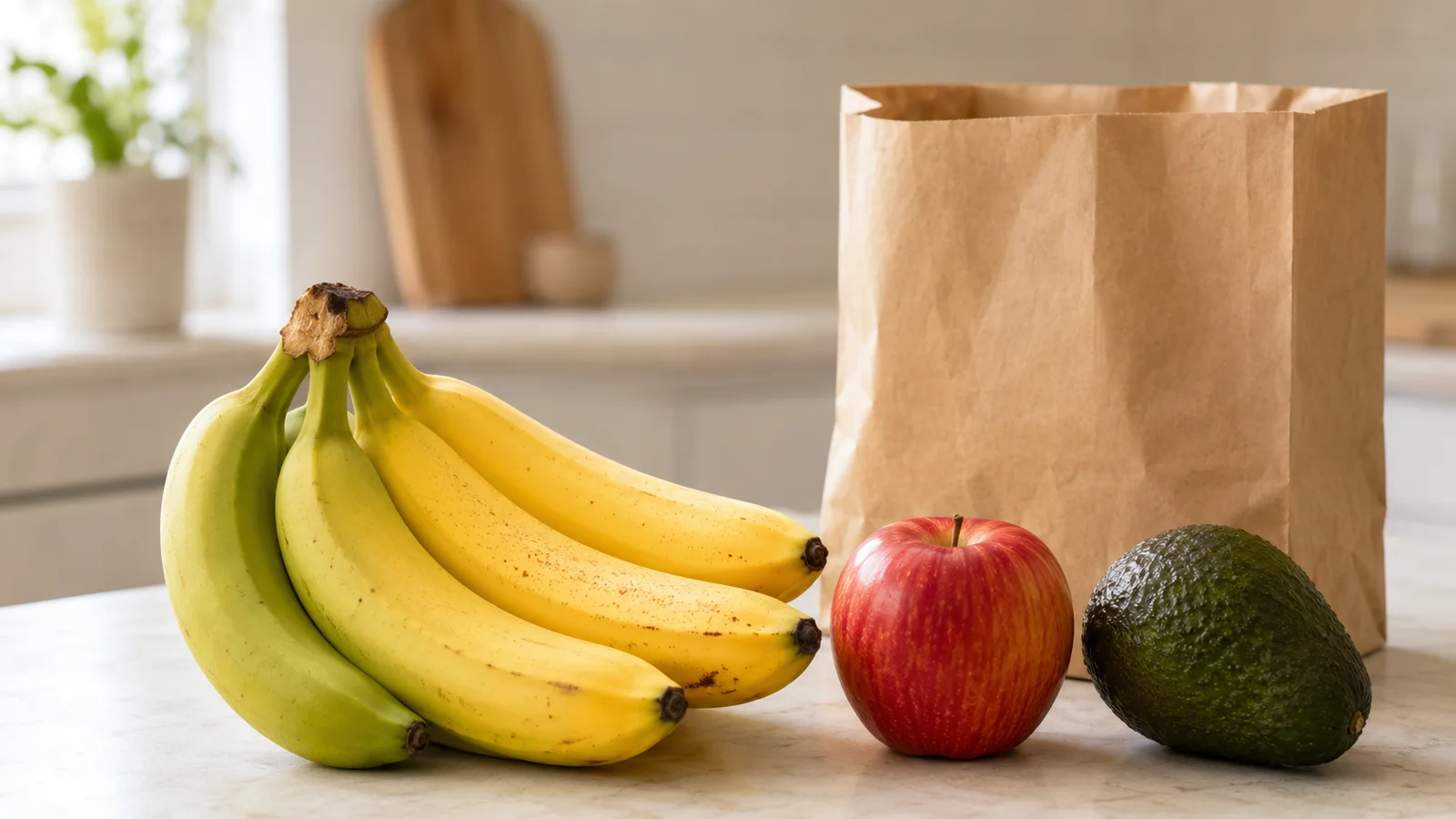
Bananas release an invisible plant hormone called ethylene. It helps them sweeten and soften, and it can give nearby fruit a gentle nudge toward ripeness too.
A banana does not stop changing when it leaves the plant. It belongs to a group called climacteric fruits, which can continue ripening after harvest. The tiny messenger behind much of that transformation is ethylene, a naturally produced gaseous plant hormone.
As a mature green banana begins making and responding to ethylene, its ripening machinery speeds up. Green chlorophyll fades from the peel, the flesh softens, aromas develop and much of the fruit's stored starch is converted into soluble sugars. That is why a ripe yellow banana tastes sweeter and feels softer than a firm green one.
The process is powerful enough that commercial bananas are usually harvested green and ripened closer to their destination. UC Davis reports that many commercial cultivars are exposed to controlled ethylene for 24 to 48 hours at warm room-like temperatures so large batches ripen more evenly.
Ethylene does not stay inside the banana. Because it is a gas, it moves through the surrounding air and can affect nearby produce that responds to it. Apples and avocados are also climacteric fruits, so sharing a bowl or bag with a ripe banana can help hurry them along. The effect is real, although speed still depends on the fruit's maturity, temperature and condition.
If you want firmer fruit to ripen faster, place it in a plain paper bag with a ripe banana or apple and fold the top loosely. The bag holds some ethylene nearby while still allowing a little airflow. Check the fruit daily, because the same setup can move from perfectly ripe to overly soft surprisingly quickly.
To slow the process, separate ripe bananas from fruit you want to keep firm and keep everything away from direct sunlight or excess heat. Green bananas are sensitive to chilling, so a cold refrigerator can interfere with normal ripening. Once bananas are ripe, refrigeration can slow further softening, although the peel may darken faster than the flesh.
Not every neighbour in the produce drawer appreciates ethylene. Some vegetables and leafy greens age faster when stored beside ethylene-producing fruit. Keeping fruit and vegetables in separate refrigerator drawers is a simple way to give both groups a better chance of lasting.
So the banana's fruit-bowl influence is not a myth or a special banana perfume. It is plant biology happening on the countertop. Use that invisible signal when an avocado refuses to cooperate, or create a little distance when the whole bowl seems determined to ripen before breakfast.
Sources
- https://postharvest.ucdavis.edu/produce-facts-sheets/banana
- https://postharvest.ucdavis.edu/ask-produce-docs/why-do-some-fruit-ripen-only-tree-and-others-ripen-only-after-they-are-picked
- https://postharvest.ucdavis.edu/sites/g/files/dgvnsk12711/files/inline-files/230110.pdf
- https://extension.umd.edu/resource/ethylene-and-regulation-fruit-ripening