Food Safety
Spud Light Warning: Why Potatoes Turn Green
That green patch is a potato’s way of saying it has seen too much light. Here is what the colour can signal, what cooking cannot fix and when trimming is enough.
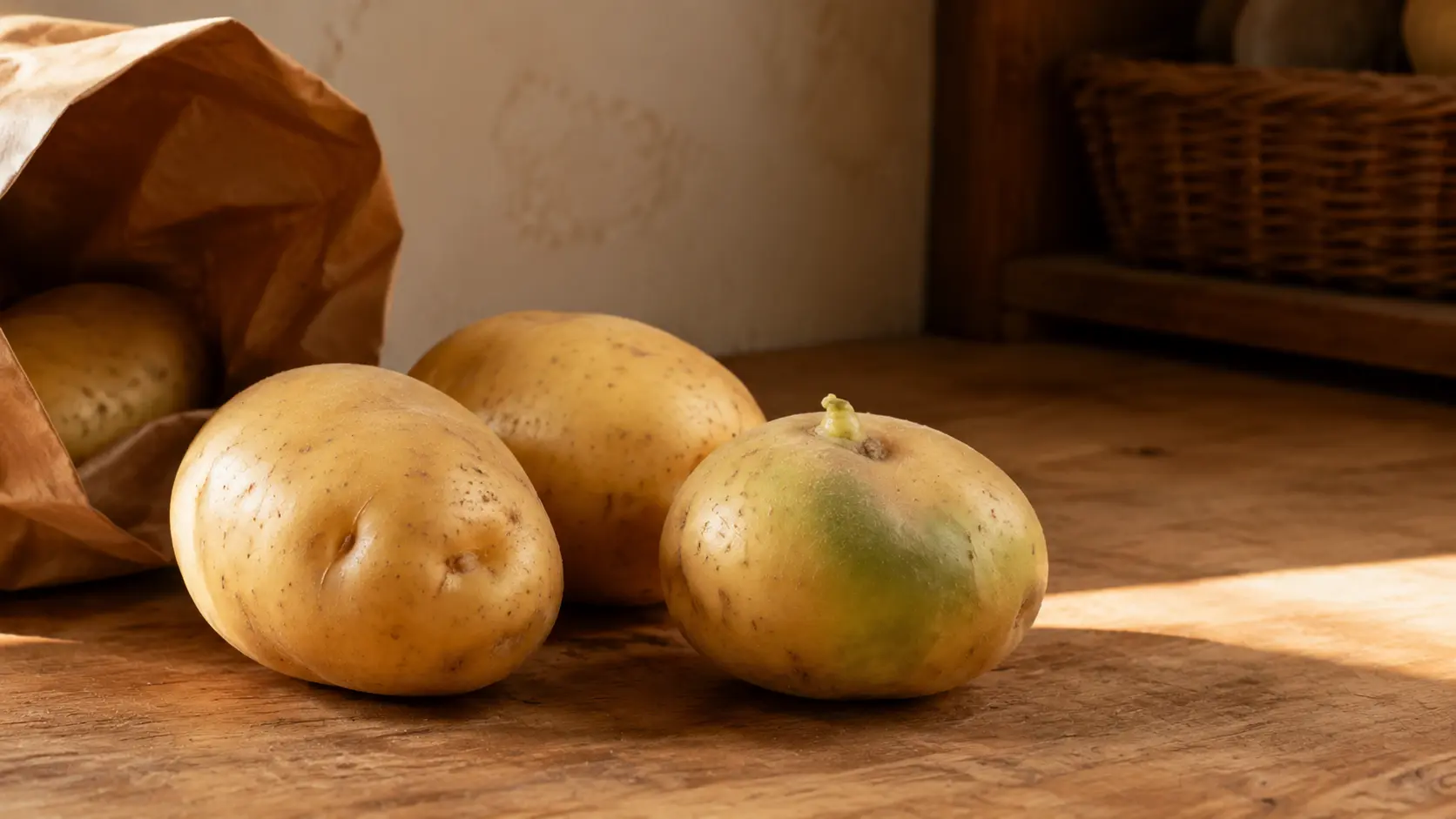
A potato with a green shoulder can look as though it is trying to become a lime. It is not ripening into a new vegetable. The colour usually appears after the tuber has been exposed to sunlight or artificial light, whether in the field, at the store or on a bright kitchen counter.
The green pigment is chlorophyll. The practical concern is that the same light exposure can also encourage a potato to produce more glycoalkaloids, a family of natural plant compounds. Potatoes mainly make two called alpha-solanine and alpha-chaconine. These compounds are part of the plant’s built-in defence system, and low levels are normally present in potatoes.
Health Canada says the low levels people ordinarily encounter in properly stored potatoes are not a concern. Trouble is more likely when a potato shows physical changes such as pronounced greening, sprouting, bruising or rotting. Most of the glycoalkaloids are concentrated in the peel and the flesh just beneath it, while sprouts and the areas around the eyes deserve particular attention.
Colour is a useful warning, but it is not a perfect measuring tool. Russet or red skins can make greening harder to see. Your taste buds may offer another clue: unusually bitter flavour or a burning sensation in the mouth can indicate elevated glycoalkaloids. If that happens, stop eating the potato rather than trying to season your way through it.
The oven is not a reset button. Health Canada and the Canadian Food Inspection Agency both note that ordinary cooking methods do not reliably eliminate these compounds. Baking, boiling, microwaving or frying a heavily green potato does not turn it back into an ordinary one.
For a potato with only a small green patch, cut the affected area away generously and peel the potato before cooking. Also remove sprouts, bruised sections and the flesh around the eyes. If greening is extensive, the potato is badly damaged, or several warning signs appear together, discard the whole potato. A bitter or burning potato belongs in the same no-thank-you category.
Prevention is pleasantly unglamorous: store potatoes in a cool, dry, dark place, ideally in a breathable paper bag, basket or ventilated container. Keep them away from windows and bright under-cabinet lights. Moving a green potato back into darkness may fade its colour, but Health Canada cautions that this does not prove its glycoalkaloid level has dropped.
So the next time a spud starts flashing green, read the signal before reaching for the peeler. A tiny patch may call for careful trimming. A potato that has gone full traffic light is telling you to stop.
Sources
- https://www.canada.ca/en/health-canada/services/food-nutrition/reports-publications/food-safety/glycoalkaloids-foods.html
- https://inspection.canada.ca/en/food-safety-consumers/fact-sheets/specific-products-and-risks/fruits-and-vegetables/natural-toxins
- https://extension.psu.edu/potatoes-in-the-garden-and-the-kitchen/
You may also like these