Kitchen Science
Clove at First Slice: Why Chopped Garlic Gets Loud
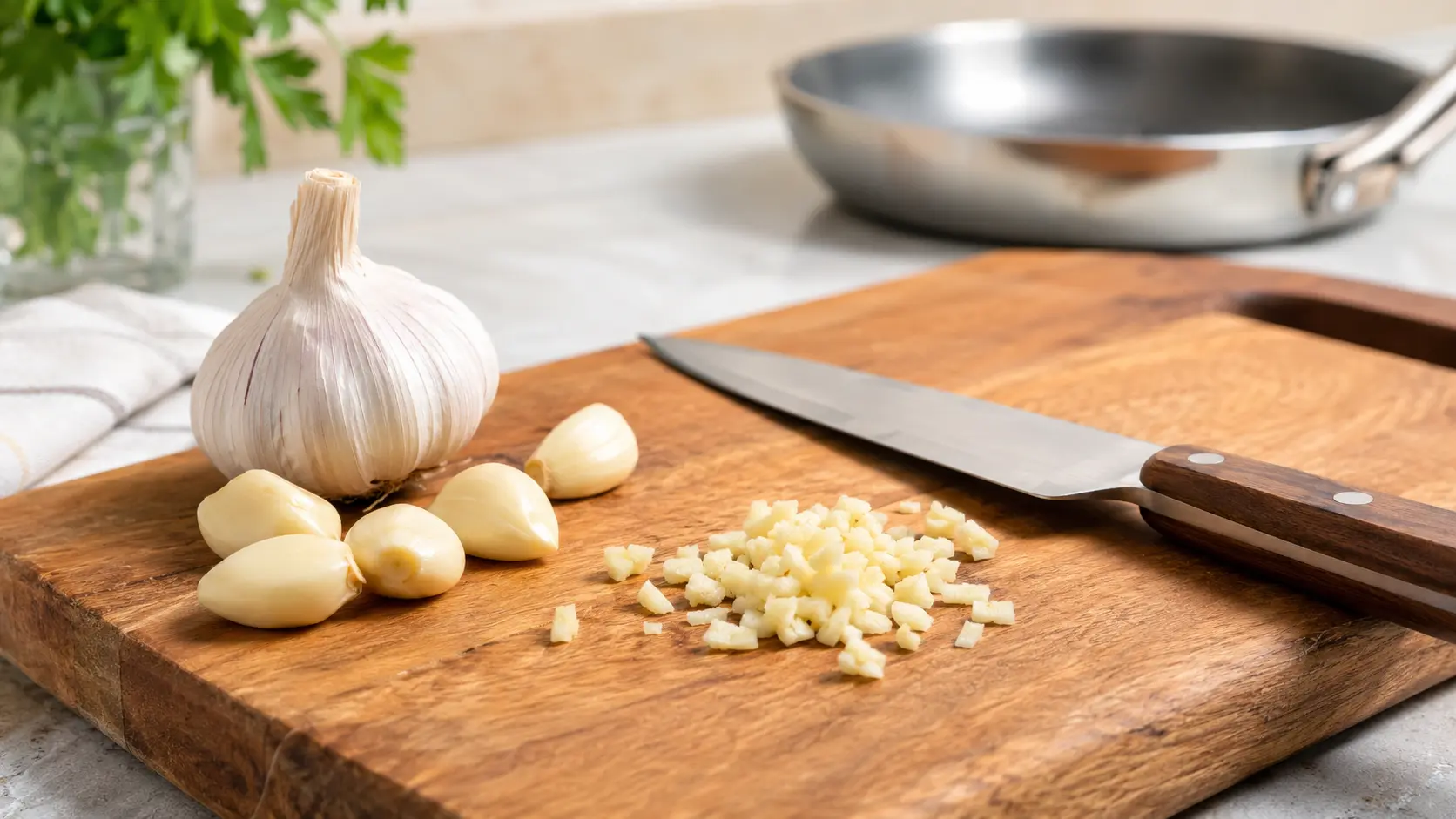
A quiet garlic clove becomes dramatically fragrant when chopped because cutting lets an enzyme and its ingredients finally meet.
An intact garlic clove keeps surprisingly calm. Slice, crush or grate it, and the kitchen suddenly knows exactly what you are making. That burst of aroma is chemistry triggered by damage to the clove's cells.
Fresh garlic stores a sulfur-containing compound called alliin separately from an enzyme called alliinase. Chopping breaks the cellular compartments between them. Once they meet, the enzyme rapidly helps form allicin, the unstable compound strongly associated with freshly cut garlic's familiar pungency.
The size of the cut changes the experience. A whole roasted clove stays relatively mellow. Slices rupture more cells, chopped garlic exposes still more, and a fine grate or press creates an especially intense mixture. This is why recipes can taste different even when they use the same number of cloves.
Heat changes the story too. Cooking softens garlic's sharp edge as volatile compounds disperse and other flavour reactions take over. Gentle cooking tends to produce sweeter, rounder notes, while high heat can make small pieces bitter if they brown too far.
For a milder result, use larger pieces and cook them gently. For a brighter raw-garlic punch, mince or grate the clove shortly before adding it to a dressing, dip or sauce. If the flavour is too assertive, more dilution and a little time can help.
So garlic is not being dramatic without reason. Your knife has simply introduced two neighbours who were never supposed to meet quietly.
Sources
You may also like these