
Kitchen Science
Cold Comfort: Why the Fridge Can Stale Bread Faster
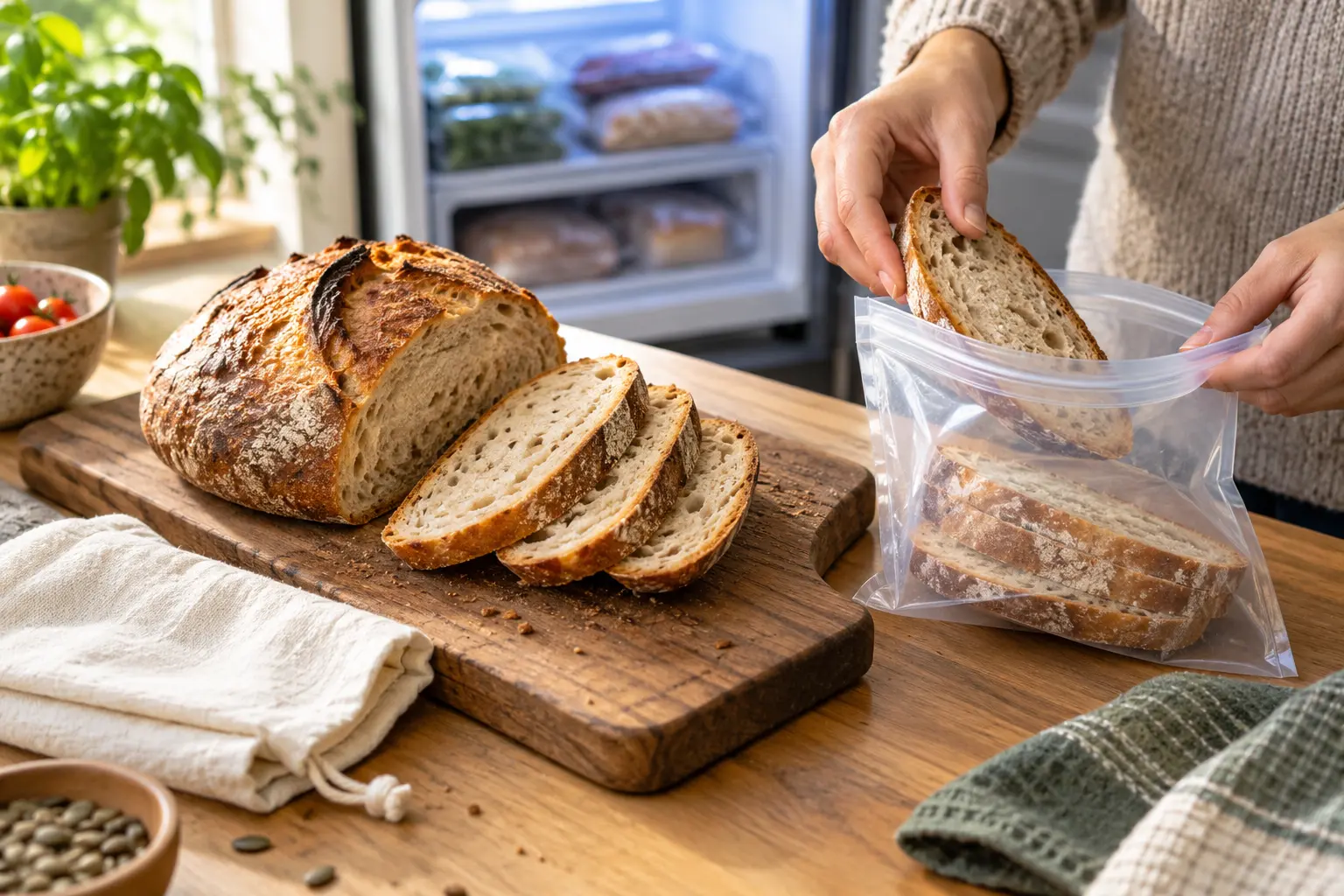
The fridge can slow mould yet hurry bread toward a firm, crumbly texture. Here is what starch is doing, and why the freezer is usually the better long-term stop.
You bring home a lovely loaf, eat two slices, and face a small kitchen puzzle: counter, fridge, or freezer? The fridge feels like the careful choice. It is cold, after all. But if texture is the goal, refrigeration can make bread seem stale sooner than leaving it at room temperature for a short time.
The surprise starts with what staling is not. Bread does lose some moisture, but a firm crumb is not simply bread drying out. During baking, heat and water loosen and swell the starch in flour. As the loaf cools and rests, some of those starch molecules begin arranging themselves into more orderly structures again. Food scientists call this retrogradation, and the gradual reordering of amylopectin is an important part of crumb firming.
Water is still involved, just in a less obvious way. It shifts among starch, gluten, and the tiny spaces inside the crumb. That redistribution changes how flexible the crumb feels. A slice can therefore feel dry and tough even though plenty of water remains inside it.
Here is the cold twist: temperatures above freezing can encourage the molecular rearrangements linked with staling. A refrigerator slows many biological and chemical processes, including mould growth, but it does not slow every texture change. For ordinary lean breads, the chilly middle ground of the fridge is often especially unhelpful to softness.
Freezing behaves differently. Once bread is frozen, molecular movement and water migration slow dramatically. That is why the freezer is usually the practical choice when a loaf will not be eaten within a day or two. Slice it first, wrap it tightly or use an airtight freezer-safe container, and separate slices with small pieces of parchment if they tend to stick. Then take out only what you need.
For bread you expect to finish quickly, room-temperature storage protects texture better. Keep it covered to limit moisture loss, but remember that packaging changes the trade-off: an airtight bag preserves a soft crumb while softening a crisp crust; a paper or cloth bag protects the crust but lets the crumb dry sooner. Warm, humid kitchens can also bring mould sooner, so use your judgment and freeze early when conditions are muggy.
A toaster or brief oven warm-up can temporarily soften a stale crumb because heat disrupts some of the ordered starch structure. That rescue is temporary. Reheat only the portion you will eat, since warmed bread firms again as it cools. Very dry, mould-free pieces can also become croutons, crumbs, panzanella, or a plant-based bread pudding.
Stale and spoiled are different. Staling is mainly a quality change. Visible mould is a food-safety warning. Bread is porous, so mould can extend below what you see; USDA guidance is to discard mouldy bread and baked goods rather than trimming away the spot. Do not sniff a mouldy loaf.
The simple storage rule is: counter for soon, freezer for later, fridge only when slowing spoilage matters more than preserving a tender crumb. Your refrigerator is not doing anything wrong. Bread starch simply has its own ideas about what cold comfort means.