
Label Know-How
Label With It: A Vegan Shopper’s Shortcut Through Canadian Ingredient Lists
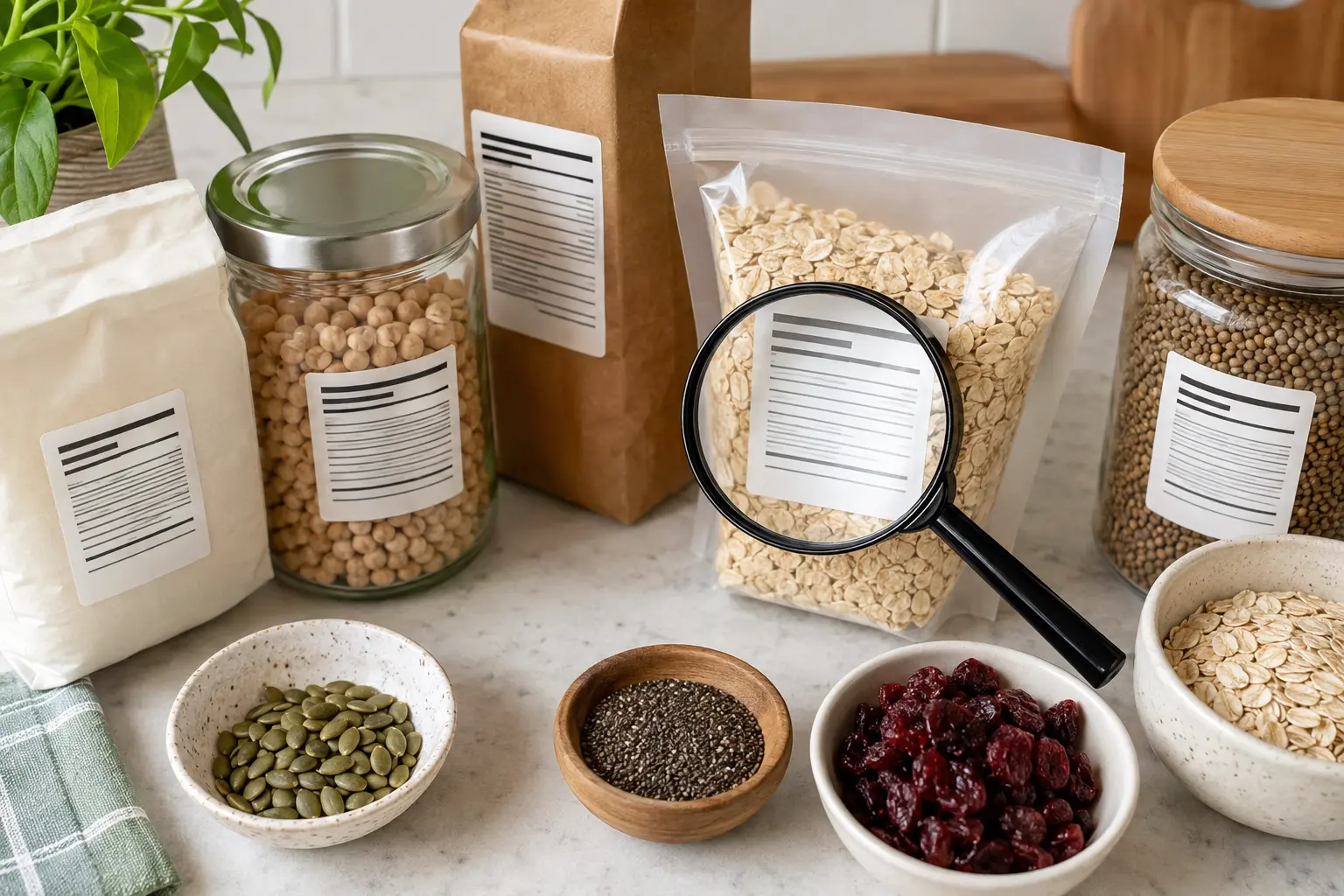
A Canadian ingredient list is more than fine print. Read it in three quick passes and it can reveal what dominates the package, where allergens sit and when one vague word deserves a follow-up.
A package can cover its front with leaves, earthy colours and cheerful words, but the ingredient list is where the food has to introduce itself. For a vegan shopper in Canada, knowing the list’s basic grammar can turn a slow aisle-side investigation into a quick three-pass scan.
Start with order. Most prepackaged foods containing more than one ingredient must provide a list, and ingredients appear from greatest to least by weight before processing. That means the first few entries describe much of the product’s foundation. It does not mean the first ingredient is automatically the healthiest, only that more of it went into the recipe by weight than the ingredients that follow.
Next, open the brackets. When one ingredient is made from other ingredients, its components may appear in parentheses. A sauce, spread or filling can therefore reveal milk, egg or another non-vegan component inside the larger ingredient. Canada’s rules include some exemptions from component declaration for particular standardized ingredients and preparations, but priority allergens and gluten have additional declaration requirements. The practical move is simple: scan both the main line and everything tucked inside parentheses.
Sugar has its own filing system. Sugar-based ingredients are often grouped after the word ‘Sugars’ in parentheses, helping shoppers see several sweeteners as one combined entry in the ingredient order. Maple syrup, cane sugar and fruit-juice concentrate can sound like separate little additions when scattered across a recipe; the grouped format makes their collective place easier to spot. This is useful label information, not a verdict on whether a product belongs in your cart.
Then look for plain-language allergen clues. Canadian labels must identify priority food allergens, gluten sources and added sulphites when the rules require it, either within the ingredient list or in a separate ‘Contains’ statement. For vegan shoppers, declarations such as milk or egg are also an efficient second check. A ‘May contain’ statement serves a different purpose: it warns about possible accidental cross-contact rather than naming an intentional ingredient. Anyone managing an allergy needs to treat that distinction as a safety matter, not merely a vegan preference.
Front-of-package wording still needs translation. CFIA guidance distinguishes several kinds of vegetarian eating, including versions that permit dairy, eggs or both. In other words, ‘vegetarian’ does not automatically mean vegan. Food claims in Canada must be truthful and not misleading, but a broad claim is not a substitute for checking the ingredient list and allergen declaration against your own standard.
One unresolved word may remain: ‘flavour’ or ‘natural flavour.’ Canadian ingredient rules allow flavour declarations and also prescribe source-specific names in certain situations, but a generic flavour term does not always give a shopper enough detail to confirm a strict vegan choice. That does not prove an animal source is present. It means the label alone may not settle the question. A clear vegan claim, reputable certification or a direct answer from the manufacturer can close the gap without guesswork.
Here is the ten-second version. First, read the opening ingredients to learn what the food is mostly made from. Second, scan every parenthesis plus the ‘Contains’ line for dairy, egg and other animal-derived ingredients. Third, pause at ambiguous flavours or claims and decide whether you need manufacturer confirmation. Fine print becomes much friendlier once you know where it is hiding the useful parts.
Sources
- https://inspection.canada.ca/en/food-labels/labelling/consumers/understanding-food-labels
- https://www.canada.ca/en/health-canada/services/food-nutrition/nutrition-labelling/ingredient-list.html
- https://inspection.canada.ca/en/food-labels/labelling/industry/list-ingredients-and-allergens
- https://inspection.canada.ca/en/food-labels/labelling/industry/composition-and-quality
- https://inspection.canada.ca/en/about-cfia/acts-and-regulations/list-acts-and-regulations/documents-incorporated-reference/common-names-ingredients-and-components