
Kitchen intel
Mustard Has a Side Hustle: Keeping Your Dressing Together
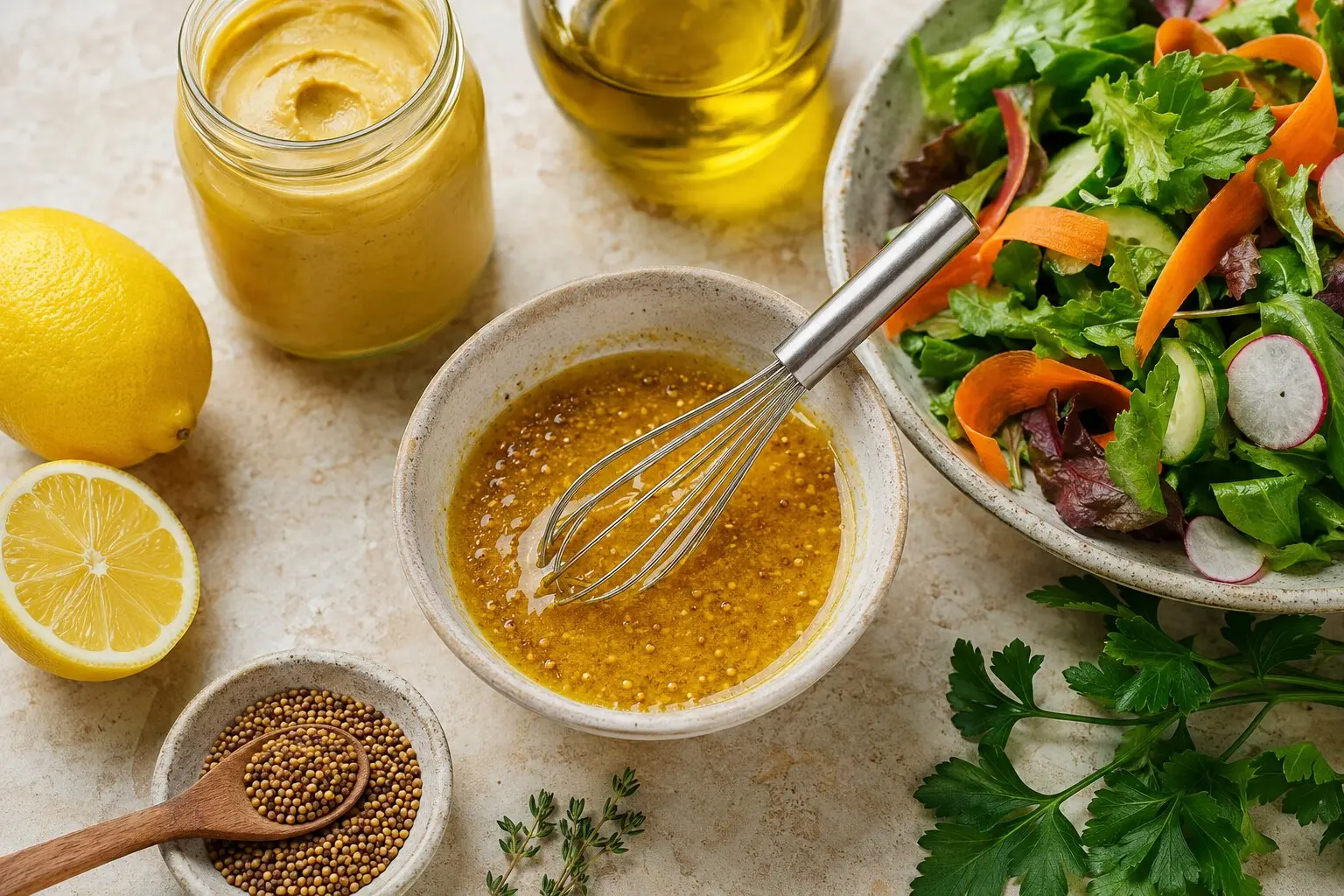
That spoonful of mustard is doing more than adding tang. It is also helping oil and vinegar stop acting like awkward strangers at a salad party.
Oil and vinegar are famously bad at mingling. Shake them hard and they will briefly form a cloudy vinaigrette, but leave the bottle alone and the two layers usually return. Add a little mustard, though, and the dressing tends to stay blended longer. Your condiment has quietly taken a second job as kitchen peacekeeper.
A vinaigrette is an emulsion: tiny droplets of one liquid are dispersed through another liquid that does not naturally mix with it. Whisking or shaking breaks the oil into smaller droplets, but those droplets are always looking for a chance to reunite. The more slowly they bump back together, the longer the dressing stays smooth.
Mustard helps partly because its seeds contain mucilage, a group of water-loving polysaccharides concentrated around the seed coat. These compounds thicken the watery portion of a dressing and slow the movement of oil droplets. A published comparison found that water-soluble yellow mustard mucilage provided strong emulsion stability under the conditions tested, including good performance beside gum arabic and citrus pectin.
There is an important distinction here: that research studied isolated mustard mucilage under controlled conditions, not every jar of supermarket Dijon. It supports the food-science explanation, but it does not mean all prepared mustards will stabilize a dressing equally. As a practical inference, a smooth mustard used in a generous enough amount will usually be more helpful than a few decorative whole seeds.
For a dependable small batch, whisk together one tablespoon of lemon juice or vinegar, one teaspoon of Dijon mustard, a pinch of salt and any seasonings you like. Then add three tablespoons of oil in a slow stream while whisking. The mustard brings sharp flavour, while the whisking creates the droplets and the seed compounds help keep the arrangement from immediately falling apart.
If the dressing still splits, nothing has failed dramatically. Shake it again in a tightly closed jar. For a slightly thicker result, add another small spoonful of mustard. If it tastes too sharp, balance it with a little maple syrup rather than pouring in much more oil all at once.
This trick is useful beyond leafy salads. Mustard vinaigrette can coat roasted potatoes, brighten cooked lentils, dress a grain bowl or turn leftover vegetables into lunch. Once you know why the jar works, it becomes less of a condiment and more of a tiny yellow kitchen tool.
So yes, mustard is tangy, spicy and excellent on a sandwich. But when oil and vinegar refuse to cooperate, it also arrives with a clipboard and a team-building exercise.