
Kitchen Science
Foam Sweet Foam: What Makes Barista Oat Milk Froth
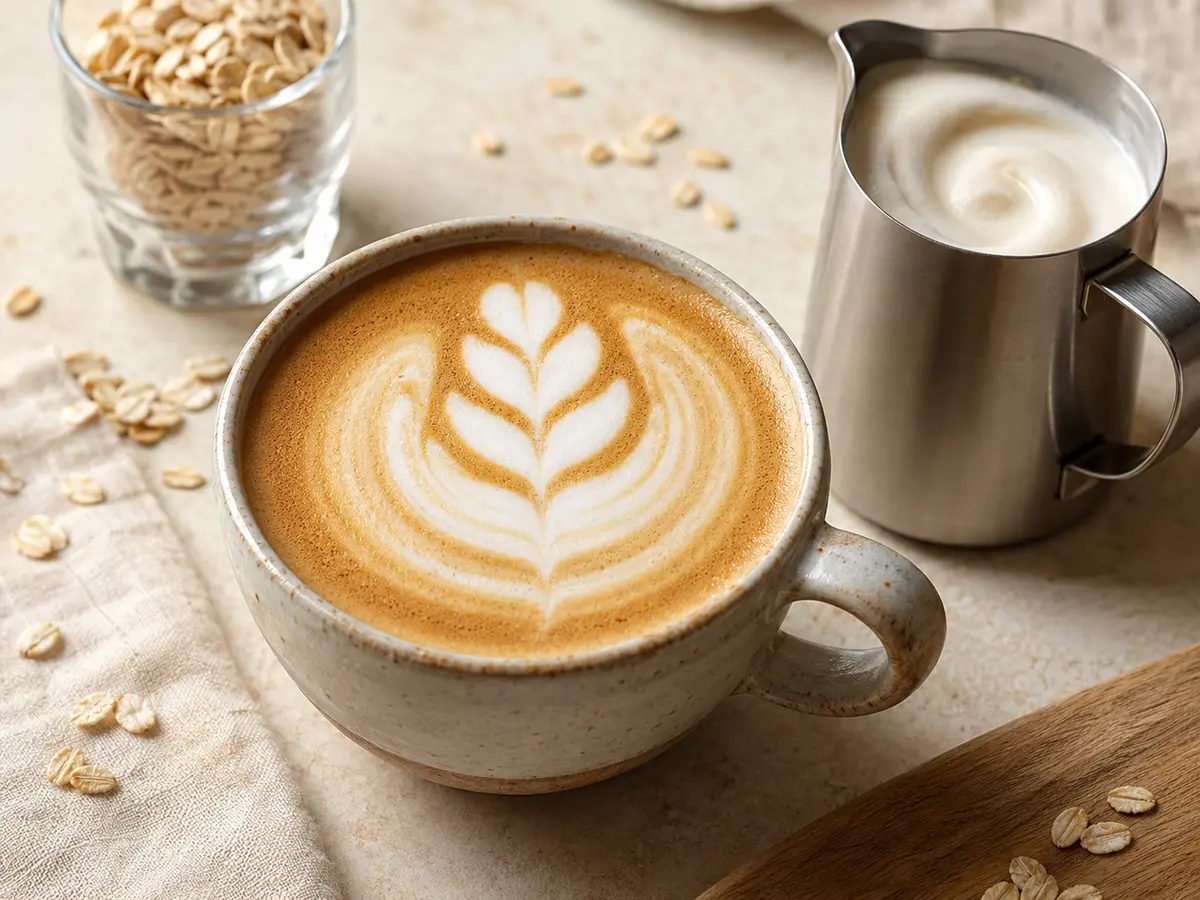
A latte’s fluffy cap is tiny food engineering. Oat proteins, fat, heat and a carefully balanced formula all help turn a splash of plant milk into silky microfoam.
A good latte foam looks effortless, but every spoonful is a temporary bit of architecture. Frothing pulls air into a liquid and divides it into thousands of bubbles. Those bubbles survive only if the thin liquid films around them are strong enough to slow drainage and resist popping.
Protein does much of the bubble-wrangling. Protein molecules can move toward the boundary between air and water, unfold or rearrange, and help build a flexible layer around each bubble. A 2025 study of oat proteins found that water-soluble oat proteins reached that boundary quickly and formed a viscoelastic film, while oat globulins used a different kind of structural rearrangement. Both protein fractions were able to produce high volumes of stable foam under the study conditions.
The oat drink in your fridge is more complicated than oat protein suspended in water, however. A 2025 review of barista-style plant beverages describes foam as a balancing act involving protein, fat, carbohydrates, minerals, acidity, stabilizers and processing. Fat can improve richness and mouthfeel, but the amount and structure have to work with the proteins rather than crowding them away from the bubbles.
That is why the word “barista” usually signals a formula designed to behave in coffee, not simply a carton containing extra oats. Manufacturers may adjust the proportions of oil and protein, use emulsifiers or stabilizers, and control particle size so the drink stays smooth when it meets heat and acidic coffee. Two oat drinks can therefore froth very differently even when their front labels sound similar.
Temperature changes the performance too. In a 2022 study of five commercial beverages, the cold samples differed noticeably in foaming behaviour. At 65°C, their foaming properties were generally more alike. That does not mean every carton will create identical latte art, but it shows why the product, temperature and frothing method all matter.
For a friendlier home froth, start with a well-chilled carton and shake it before pouring. Introduce air near the surface only briefly, then keep the steam wand or frother slightly deeper to break large bubbles into finer ones. Aim for warm and silky rather than boiling hot. This technique is a practical inference from the foam science: smaller bubbles and a well-mixed liquid give the bubble-supporting ingredients a better chance to do their jobs.
If one oat drink produces sad bath bubbles while another makes a glossy little cloud, your frothing skills may not be the whole story. Check the ingredient list, try the same temperature and technique, and let the carton show you what its particular bubble crew can do.