Kitchen Measurement
Cup Half Full: When a Gram Beats a Scoop
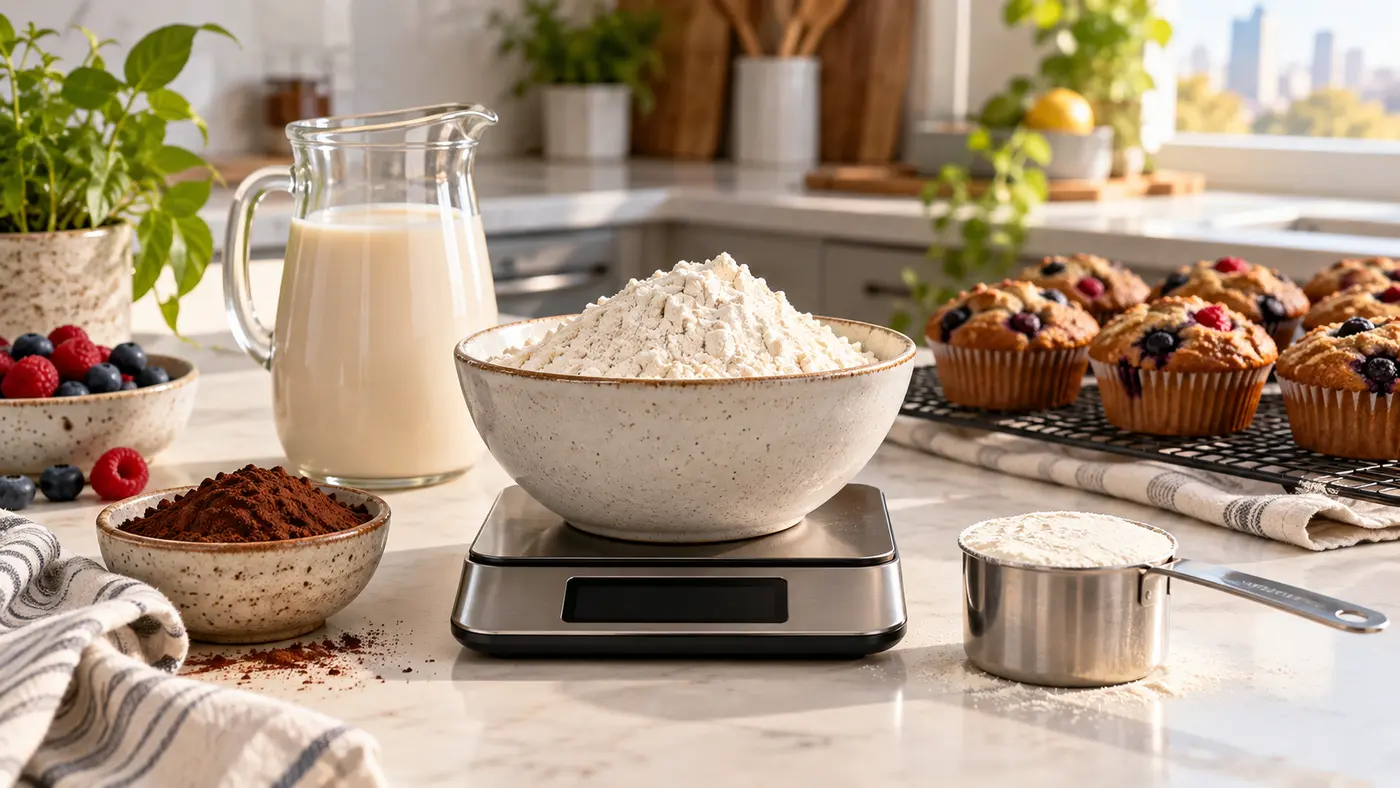
A measuring cup reports space. A scale reports mass. For flour, cocoa and other packable ingredients, that small distinction can be the difference between repeatable vegan baking and a mystery batch.
A cup and a gram can both belong in a good kitchen, but they are not describing the same thing. A cup measures volume: how much space an ingredient occupies. A gram measures mass: how much matter is sitting on the scale. With water-like liquids, volume can feel wonderfully predictable. With flour, cocoa, icing sugar and chopped nuts, the story gets fluffier.
Imagine filling a suitcase. The suitcase keeps the same volume whether the clothes are loosely tossed in or tightly rolled, but the amount inside changes. Flour behaves in a gentler version of the same way. Scooping straight from a bag can compress it. Spoon-filling a cup may leave it lighter. Sifting introduces even more air. Each method can reach the same rim while delivering a different quantity to the bowl.
That matters most when an ingredient helps build structure. Too much flour can make muffins dry or a cake firm. Too little can leave a batter looser than the recipe developer intended. Cocoa powder and brown sugar can also settle or pack, while nuts and chocolate pieces leave irregular pockets of air. One cup is still one cup of space, but it is not one universal weight across ingredients.
A digital scale skips the packing question. Put the mixing bowl on the scale, press tare to return the display to zero, then add the ingredient until the target mass appears. Press tare again before the next ingredient. Sticky maple syrup, nut butter and oil can go straight into the same bowl, which often means fewer utensils to wash.
There is one important catch: use the gram amount supplied by the recipe. A conversion found elsewhere may not match the recipe writer's own measuring method, and different ingredients never share one all-purpose cups-to-grams rule. King Arthur Baking's ingredient chart, for example, assigns separate weights to all-purpose flour, whole-wheat flour, cocoa, sugars, seeds and many other pantry staples.
You do not need to retire every measuring cup. Cups are quick and perfectly useful for many forgiving dishes, and liquid measures remain handy for pouring. The scale earns its counter space when the recipe already provides grams, when you are baking, or when you want a favourite result to be easier to repeat.
Try a tiny kitchen experiment: weigh one cup of flour filled by scooping, empty it, then weigh another filled by spooning and levelling. The numbers may explain why two bakers can follow the same words and meet different muffins. Sometimes the most helpful ingredient is not another spoonful. It is a clearer measurement.
Sources
You may also like these