
Kitchen Science
Cabbage Patch Chemistry: The Vegetable That Changes Colour on Cue
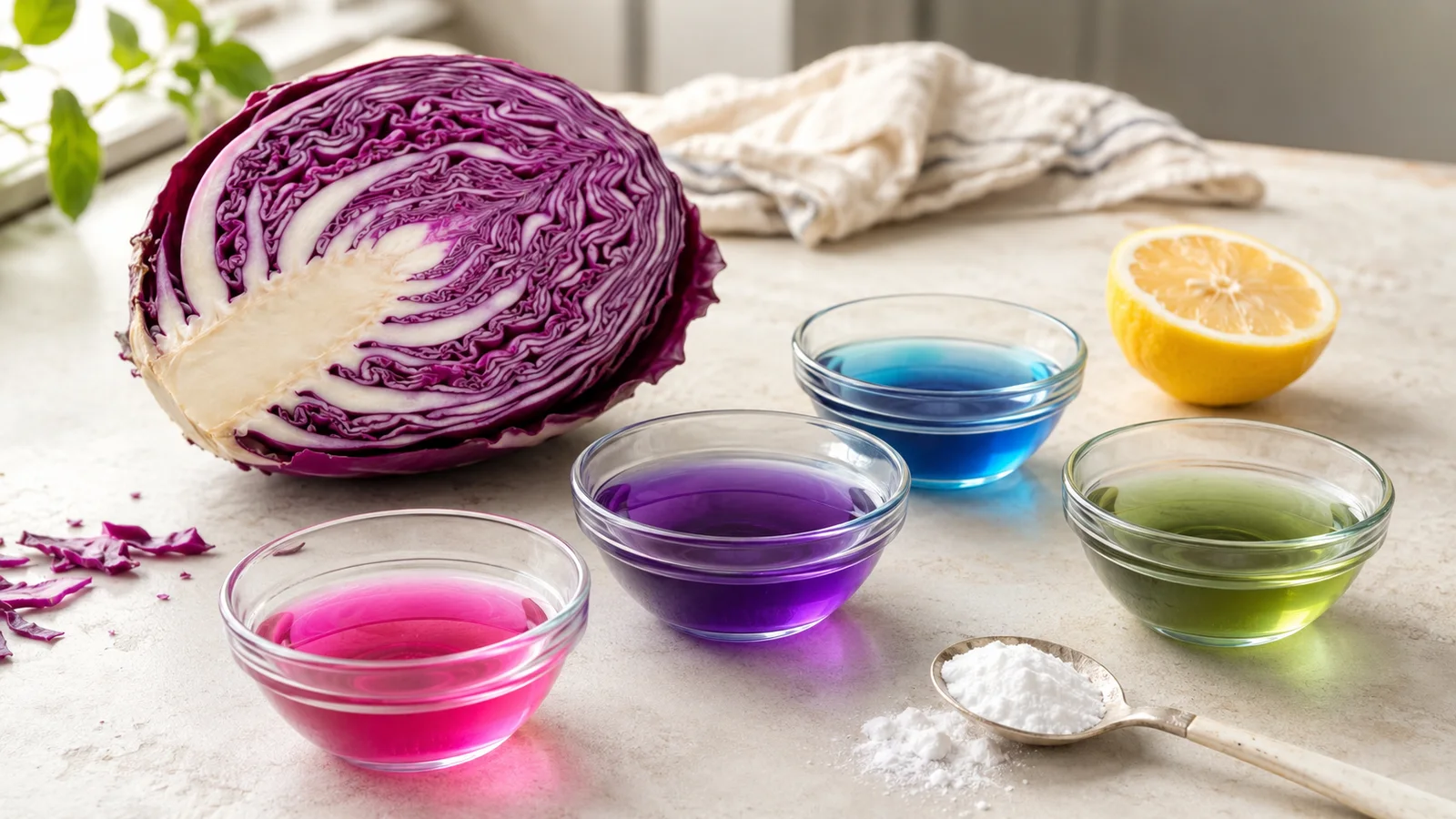
Red cabbage is not just crunchy. Its purple pigment can turn pink, blue or green, making an ordinary vegetable a surprisingly colourful kitchen chemistry lesson.
Red cabbage has a party trick hiding in its leaves. Steep chopped cabbage in hot water and the liquid turns deep purple. Add something acidic, such as lemon juice or vinegar, and it shifts toward pink or red. Add a mild base, such as baking soda dissolved in water, and it can move through blue toward green.
The colour comes from anthocyanins, a family of plant pigments. Their molecular structure changes as acidity changes, which alters the wavelengths of light they absorb and the colour we see. The American Chemical Society describes red cabbage pigment as a natural acid-base indicator: pink in acidic mixtures, purple or blue around neutral conditions, and green or yellow in more basic mixtures.
For a simple food-only demonstration, cover a handful of finely chopped red cabbage with hot water and let it sit until the water is strongly purple. Strain and cool the liquid, then divide it among several clear glasses. Stir lemon juice into one, plain water into another, and a small amount of baking-soda solution into a third. Add ingredients gradually because a little can produce a dramatic change.
This same chemistry helps explain why red cabbage can look brighter and redder in a vinegary slaw or pickle. Acidic dressing nudges the pigments toward warmer colours. A more alkaline cooking environment may push them toward blue or green, which can look unexpected even when the cabbage itself is perfectly ordinary.
Cabbage water is a useful visual clue, not a precise pH meter. Cabbage variety, pigment concentration, ingredient strength, lighting and even the colour of the glass can affect the result. That is part of the fun: the experiment shows a general chemical pattern without pretending to provide laboratory measurements.
Keep the demonstration separate from meal preparation and use clean containers. The American Chemical Society advises not eating or drinking experimental samples, especially if anything beyond food ingredients is tested. Stick with familiar kitchen ingredients, avoid household cleaners, and discard the samples when the colour show is over.