Kitchen Technology
Pan Attraction: How Induction Turns Cookware Into the Heater
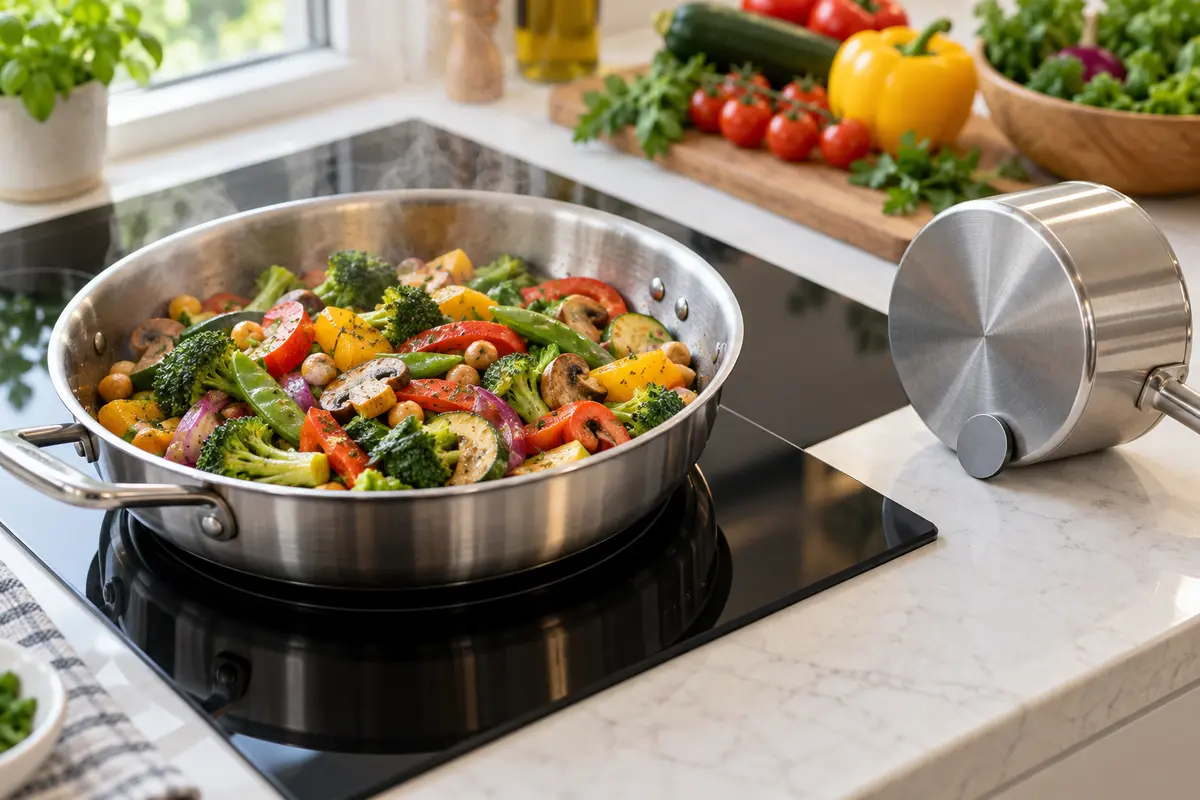
An induction surface does not need a flame or glowing coil. A changing magnetic field sends energy into compatible cookware, letting the pan itself make the heat.
Set a pan on an induction cooktop and the glass stays dark: no flame, no glowing coil, no obvious source of heat. Then the vegetables begin to sizzle. The trick is not a hidden hotplate. With compatible cookware, the pan becomes the place where heat is made.
Beneath the glass is a coil carrying a rapidly changing electric current. That creates a changing magnetic field above the cooking zone. When a compatible pan enters that field, electric currents are induced in its metal base. The metal resists those currents, and that resistance converts electrical energy into heat inside the cookware. A gas burner or radiant element heats a pan from the outside; induction sends energy to the pan so the pan can heat the food.
The glass is not magically cold. A hot pan transfers some heat back into the surface, so the cooking zone can remain hot after dinner. The difference is that the cooktop is not first heating a red-hot element and then passing that heat onward. Less energy is spent warming the surrounding surface and kitchen air.
Cookware is the important handshake. Cast iron, enameled cast iron and many stainless-steel pans work because their bases respond to a magnetic field. Plain glass, ceramic, copper and aluminum generally need a bonded magnetic layer before they can join the party. The easy test is a refrigerator magnet: if it holds firmly to the flat bottom, the pan will usually work on induction. A weak pull can mean uneven or less reliable performance.
Pan shape matters too. A broad, flat base keeps close contact with the marked cooking zone and gives the cooktop a suitable target. A severely warped pan may heat unevenly, while a very small pan may not be detected by some models. Product instructions still win because cooktop sensors and minimum pan sizes vary.
Induction also feels quick because changing the power changes energy transfer almost immediately. The cookware still stores heat, especially heavy cast iron, so a pan does not become cool the instant the control drops. Start a little lower than you might on an older coil, watch the first batch closely and avoid leaving an empty pan on high power.
Efficiency figures need context, but the broad pattern is clear. ENERGY STAR says about 85 percent of heating energy can reach the cookware with induction, compared with about one third for gas cooking. The U.S. Department of Energy describes induction as up to three times as efficient as gas and up to 10 percent more efficient than a conventional smooth-top electric range. Exact results depend on the appliance, pan, food amount and cooking task.
Curious without planning a kitchen renovation? A portable induction hob offers a small test. Check a saucepan with a magnet, centre it on the zone and try one familiar job such as boiling water or holding a gentle simmer. Lift heavy cookware instead of sliding it across the glass, and wipe the surface after it cools so grit cannot scratch it.
The useful mental picture is simple: induction does not throw heat at a pan. It gives compatible cookware the conditions to produce heat within itself. That is one strong case of pan attraction.
Sources
- https://www.energystar.gov/products/electric_cooking_products
- https://www.energy.gov/articles/making-switch-induction-stoves-or-cooktops
- https://www.energystar.gov/partner-resources/products_partner_resources/brand-owner/eta-consumers/res-induction-cooking-tops
- https://betterbuildingssolutioncenter.energy.gov/sites/default/files/attachments/Induction_Cooktop_Analysis_Report.pdf
You may also like these