Starter
Tea-Poached Daikon with Black Garlic Purée, Shiitake Broth and Buckwheat Crunch
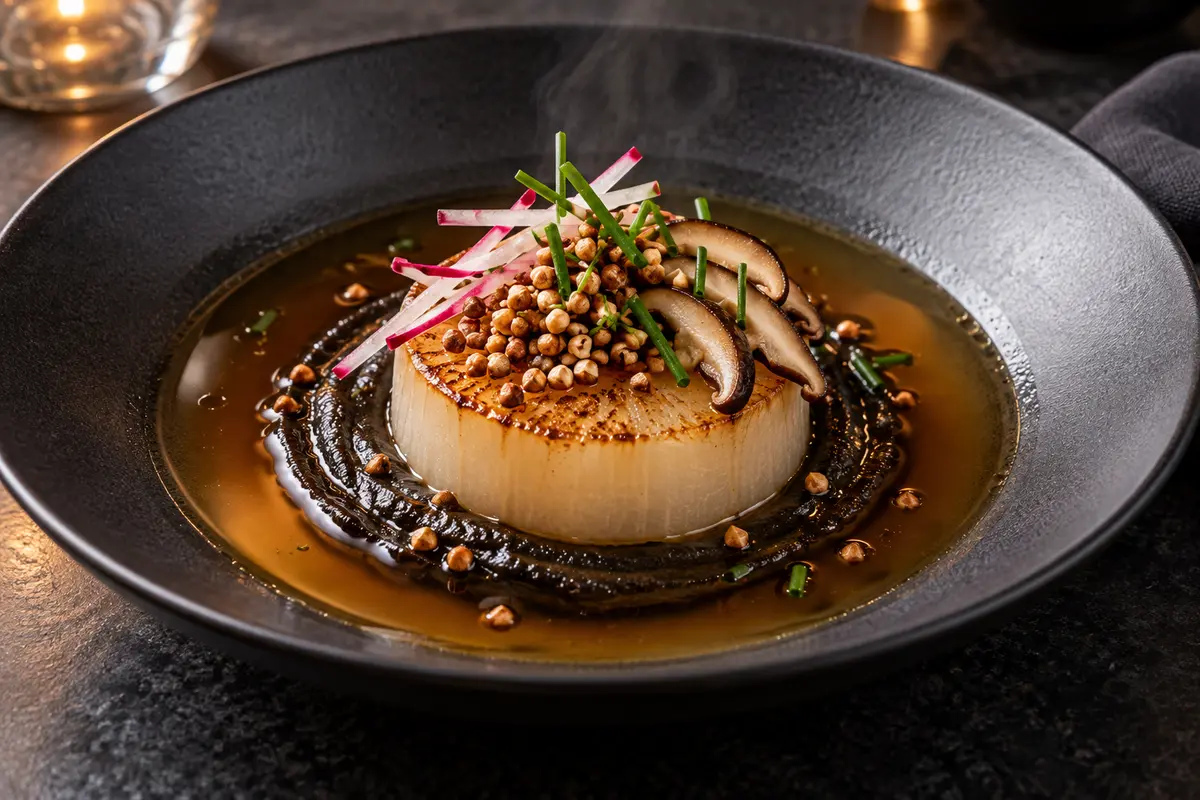
Tender tea-toned daikon meets smoky-sweet black garlic, clear shiitake broth and toasted buckwheat in a quietly dramatic first course.
30 minutes prep50 minutes cooking4 composed plates
01
Ingredients
- 1 large daikon radish (about 900 g), peeled and cut into four 3 cm-thick rounds
- 6 cups cold water
- 1 piece kombu (about 15 g)
- 15 g dried shiitake mushrooms
- 1/2 cup unsalted roasted sunflower seeds, soaked in hot water for 20 minutes and drained
- 8 black garlic cloves (about 45 g)
- 1 tablespoon rice vinegar
- 1 teaspoon fresh lemon juice
- 3/4 teaspoon fine salt, divided
- 2 tablespoons neutral cooking oil, divided
- 1/3 cup raw buckwheat groats
- 1 tablespoon reduced-sodium tamari
- 2 teaspoons pure maple syrup
- 4 red radishes, cut into fine matchsticks
- 2 tablespoons finely sliced fresh chives
02
Prepare the dish
- Combine the cold water, kombu and dried shiitake in a wide saucepan. Let stand for 20 minutes while the sunflower seeds soak.
- Set the saucepan over medium-low heat and warm it until small bubbles begin to form around the edge. Remove the kombu before the liquid simmers.
- Add the daikon rounds and 1/4 teaspoon salt. Cover with a lid slightly ajar and maintain a very gentle simmer for 35 to 45 minutes, turning once, until a thin knife slides through the daikon without resistance.
- Lift out the daikon and shiitake. Keep the daikon warm. Slice the shiitake thinly, then strain the broth through a fine sieve. Return 2 cups broth to the pan and simmer with the tamari and maple syrup for 8 to 10 minutes, until lightly concentrated. Reserve the remaining broth for loosening the purée or another use.
- Blend the drained sunflower seeds, black garlic, rice vinegar, lemon juice, 1/4 teaspoon salt and 1/3 cup hot reserved broth until completely smooth. Add another spoonful of broth if needed to create a soft, spoonable purée. Keep warm.
- Heat 2 teaspoons neutral oil in a small skillet over medium heat. Add the buckwheat groats and toast for 4 to 5 minutes, stirring frequently, until fragrant and crisp. Season with 1/8 teaspoon salt and transfer to a plate.
- Wipe the skillet, add the remaining oil and set over medium-high heat. Pat the daikon dry and sear for 2 to 3 minutes per side until lightly caramelized. Spoon 2 tablespoons of the reduced broth over the daikon and turn once to glaze.
- Warm the sliced shiitake in the remaining reduced broth for 1 minute. Taste the broth and add the final 1/8 teaspoon salt only if needed.
03
Plate with intention
The final arrangement is part of the recipe. Warm or chill the plates as directed and give every element a reason to be there.
- Choose four warm, wide-rimmed charcoal or dark stoneware bowls so the pale daikon and amber broth stand out.
- Spoon about 3 tablespoons black garlic purée into the centre of each bowl and spread it into a low circle. Set one daikon round directly on top, keeping the presentation centred and level.
- Lay a few shiitake slices across one side of the daikon. Spoon the clear broth around the base, allowing it to meet the purée without covering the caramelized top.
- Build modest height with a small mound of buckwheat crunch, then finish with radish matchsticks and sliced chives. Serve immediately while the broth and daikon are hot and the buckwheat remains crisp.
Before service
Chef notes
- Cut the daikon rounds to the same thickness so they become tender at the same time; save the tapered ends for soup or slaw.
- Do not let the kombu boil. Removing it just before the simmer keeps the broth clean-tasting and clear.
- The purée, broth and poached daikon can be prepared one day ahead. Rewarm them gently, then sear the daikon and toast the buckwheat just before plating.
Estimated per serving
Nutrition at a glance
- Calories
- 270
- Fat
- 15g
- Saturated fat
- 1.5g
- Carbohydrates
- 30g
- Fibre
- 7g
- Sugars
- 8g
- Protein
- 8g
- Sodium
- 480mg
Daikon, mushrooms, sunflower seeds and buckwheat provide a mix of fibre and plant protein in this starter.
Estimates vary with ingredient brands, substitutions and serving size.You may also like these