Starter
Roasted Beet Carpaccio with Orange, Coriander Dressing and Pumpkin-Seed Crunch
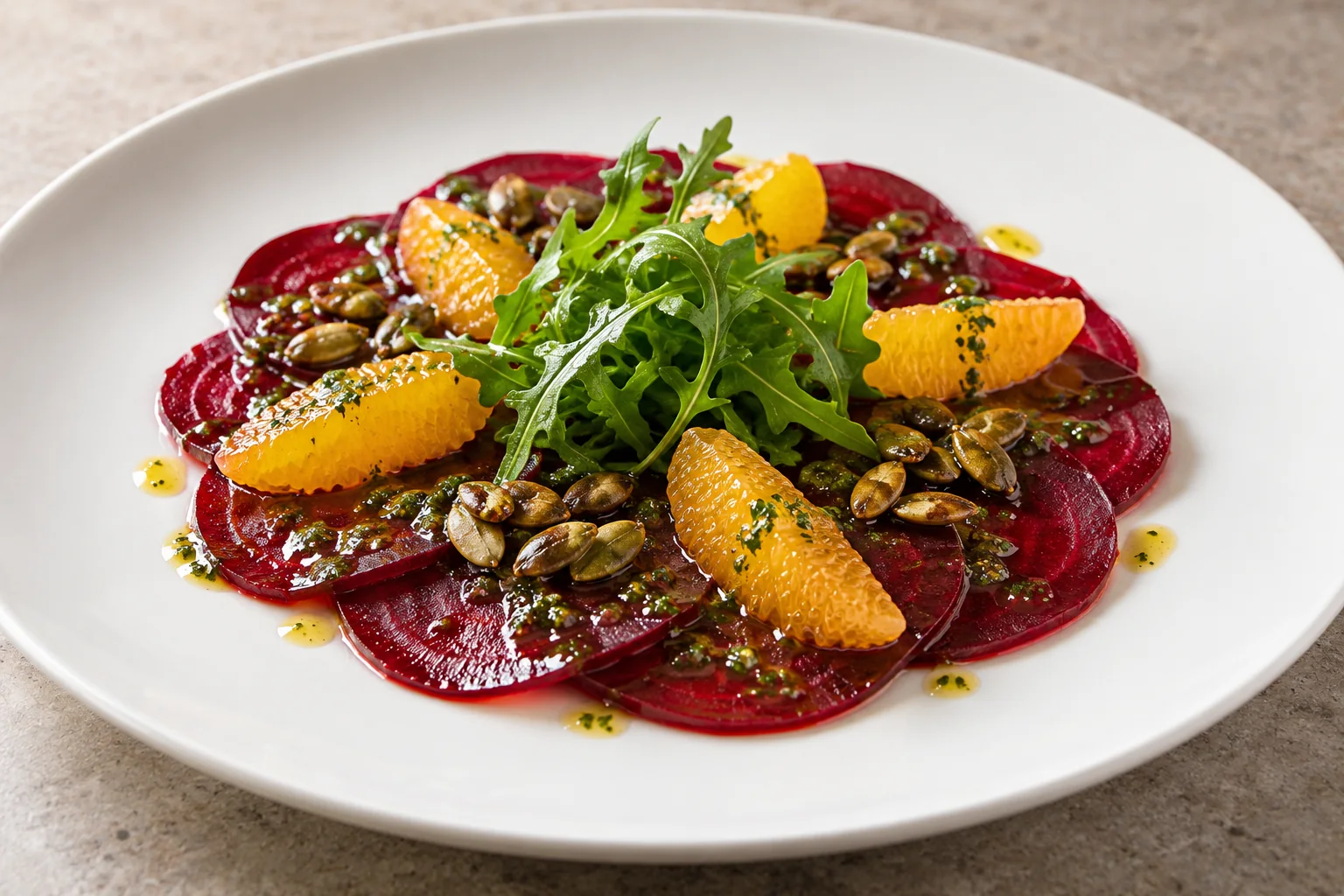
Paper-thin roasted beets form a jewel-toned canvas for clean orange segments, fragrant toasted-coriander dressing and crisp pumpkin seeds. A small arugula crown brings a peppery finish to this composed starter.
30 minutes prep70 minutes cooking4 composed plates
01
Ingredients
- 4 medium red beets, about 600 g total, scrubbed and stems trimmed
- 3 tablespoons (45 ml) extra-virgin olive oil, divided
- 2 tablespoons (30 ml) water, for the roasting dish
- 1/2 teaspoon fine salt, divided
- 2 medium oranges, about 300 g peeled flesh, plus any juice caught during segmenting
- 1 teaspoon whole coriander seeds
- 1 tablespoon (15 ml) fresh lemon juice
- 1 teaspoon (5 g) vegan-labelled Dijon mustard
- 2 teaspoons (10 g) pure maple syrup
- 1/4 teaspoon freshly ground black pepper
- 40 g unsalted hulled pumpkin seeds
- 30 g baby arugula, washed and thoroughly dried
- 1 teaspoon finely grated orange zest, taken from one washed orange before peeling
02
Prepare the dish
- Heat the oven to 200 C (400 F). Rub the beets with 1 tablespoon of the olive oil and 1/4 teaspoon of the salt. Place in a small baking dish, add 2 tablespoons water and cover tightly with a lid or foil.
- Roast for 50-65 minutes, depending on size, until a thin knife slides through the centre with little resistance. Leave covered for 10 minutes, then uncover and let cool until comfortable to handle. The cooking allowance includes the initial cooling period; larger beets may need longer.
- Meanwhile, toast the coriander seeds in a dry small skillet over medium heat for 60-90 seconds, shaking the pan until fragrant. Transfer immediately to a mortar and crush coarsely.
- Toast the pumpkin seeds in the same dry skillet over medium-low heat for 3-4 minutes, stirring frequently, until lightly golden and beginning to pop. Cool on a plate and chop half of them roughly; keep the remainder whole.
- Zest one orange before peeling. Working over a bowl to catch the juice, cut the peel and white pith from both oranges. Cut between the membranes to release clean segments. Squeeze the remaining membranes into the bowl and reserve 2 tablespoons (30 ml) juice; add a little water only if needed to reach that amount.
- Whisk the reserved 30 ml orange juice, lemon juice, Dijon, maple syrup, crushed coriander, remaining 2 tablespoons olive oil, remaining 1/4 teaspoon salt and black pepper into a glossy dressing.
- Slip the skins off the warm beets using a clean towel or gloves. Let the peeled beets cool for about 10 minutes while finishing the dressing. Slice across the beets into even 1-2 mm rounds using a sharp knife or a mandoline with its hand guard; do not attempt to slice while they are too hot to hold safely.
- Keep the beet slices separate from the orange segments until plating to avoid staining the citrus. Gently toss the dry arugula with 1 teaspoon of the dressing just before assembly; reserve all remaining dressing for the plates.
03
Plate with intention
The final arrangement is part of the recipe. Warm or chill the plates as directed and give every element a reason to be there.
- Use four wide matte-white plates at cool room temperature. Arrange one-quarter of the beet slices on each plate in a low overlapping ring about 15 cm across, leaving a generous clean rim and a small open centre.
- Brush the beet rings lightly with about 2 teaspoons dressing per plate. Place the orange segments at alternating angles across the rings without covering the beet pattern.
- Set a small loose tuft of dressed arugula in each open centre, lifting the leaves gently for no more than 3 cm of height; keep the citrus and beet slices flat.
- Scatter the chopped and whole toasted pumpkin seeds in three small clusters per plate. Spoon the remaining dressing sparingly over the beets and in a few small drops beside the ring, then finish with the orange zest. Serve immediately, cool or barely warm rather than refrigerator-cold.
Before service
Chef notes
- Roast and peel the beets up to 2 days ahead and refrigerate covered. Bring them toward cool room temperature for 20 minutes before slicing and serving; hold the citrus separately and dress only at service.
- Thin, even slices are the key texture. A guarded mandoline gives consistency, but a sharp knife is suitable if you work slowly; a slightly thicker slice is preferable to an unsafe cut.
- Dijon contains mustard, a priority allergen in Canada. For a mustard allergy, omit it and whisk the dressing again immediately before using. Check packaged seeds and mustard for vegan ingredients and any relevant cross-contact warnings.
Estimated per serving
Nutrition at a glance
- Calories
- 260
- Fat
- 15g
- Saturated fat
- 2g
- Carbohydrates
- 27g
- Fibre
- 5g
- Sugars
- 20g
- Protein
- 5g
- Sodium
- 420mg
Beets and oranges contribute fibre, while pumpkin seeds add some plant protein; values are estimates per starter portion and vary with produce size, brands and dressing distribution.
Estimates vary with ingredient brands, substitutions and serving size.You may also like these